Skip to the day
LiveWW2The Second World War, in real time
Day 14
Thursday 14 September 1939

Berlin announces its troops are in Gdynia and the garrison is surrendering, with nothing from the Polish side; the Commons limits British bombing to military objectives so long as Germany does the same, gives the Minister of Labour a veto on the hiring of key workers by 223 to one, and spends the evening on what has gone wrong with evacuation; the Government sets out tribunals for 50,000 enemy aliens; and Washington waits for Borah to open the embargo fight on the radio a week before Congress meets

From the LIVE WW2 feed

The day in dispatches

Filed through the day, as it happened
Newest first
Summary

What we know at the close of the fourteenth day

Allied Press Service

The German authorities announced this morning that their troops entered Gdynia at 09:15 GMT and that the garrison is surrendering. No Polish account has been received, and the announcement says nothing about the rest of the coast.

The Commons sat from 13:45 GMT. Neville Chamberlain said Britain will not deliberately attack civilians for terror so long as Germany observes the same restraint. The Control of Employment Bill passed its second reading 223 to one at 16:24 GMT. In the evening's evacuation debate John Colville put Scotland's figures at 175,000 moved, 135,000 of them children, and gave no number for returns. Walter Elliot, closing the debate, said children should not be sent to billets without inspection except under rush conditions.

The Government's account of its policy on enemy aliens puts them at about 50,000, about 35,000 of them refugees. Their cases go to local tribunals rather than to general internment.

At Greymouth, New Zealand, 119 men have enlisted for the Special Force; of 68 examined, 48 are fit.

Still open: Warsaw and Modlin, where Wednesday's claims stand and nothing new can be checked; the Casablanca casualties; the Congress Working Committee's statement at Wardha; the Saar; the British force in France.

Senator Borah's broadcast for keeping the arms embargo goes out tonight, American time, a week before Congress meets.
Correspondent

The embargo fight opens on the radio tonight, a week before Congress meets

The New York Register
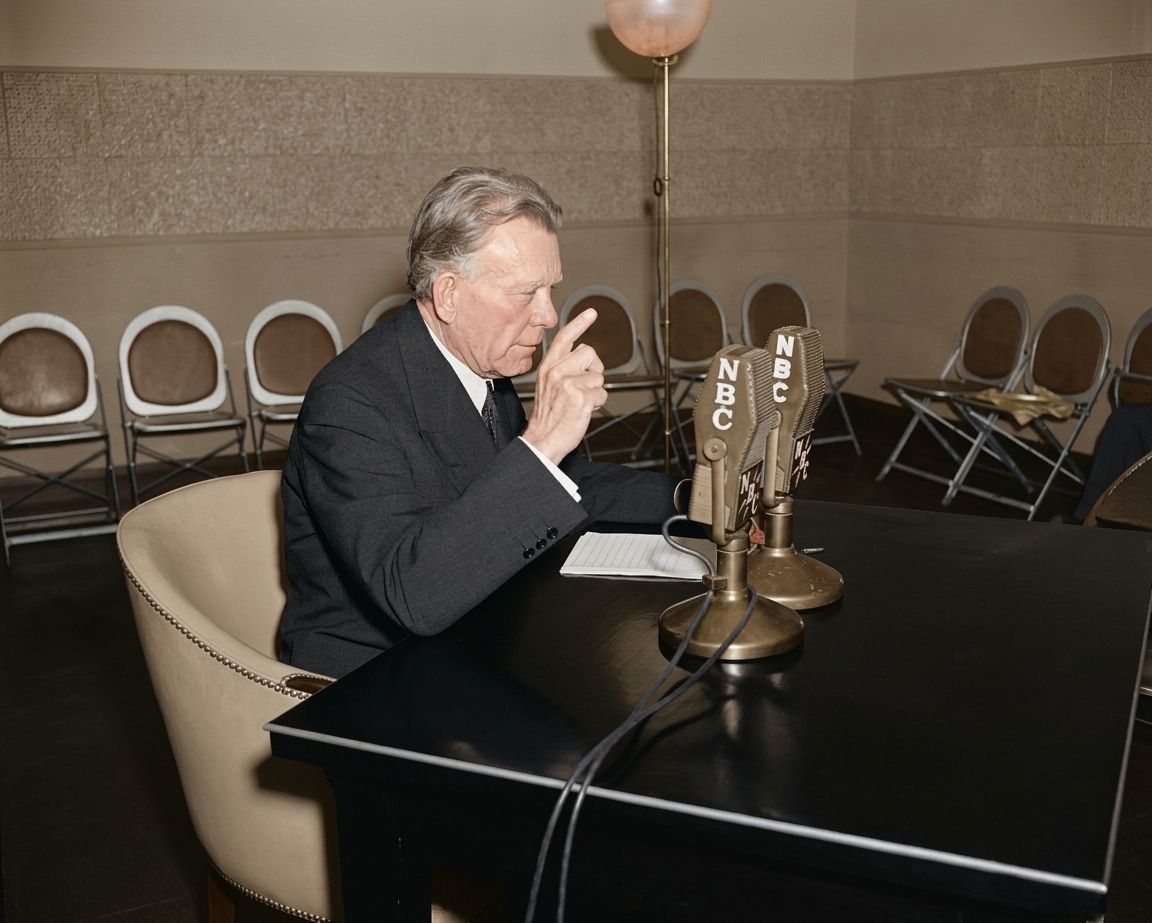
Senator William Borah, seated, in a dark suit, in a Harris and Ewing studio portrait.
Senator William Borah of Idaho, Washington, 1938. Colourised from original Library of Congress photograph. Library of Congress, Harris & Ewing collection, LC-DIG-hec-27264. No known restrictions on publication.

Senator William Borah goes on the air tonight to argue that the arms embargo should stay. He is the first senator to take the argument to the public since the President summoned Congress, and he is answering a position the President has already stated.

Wednesday's proclamation calls Congress to meet at noon on 21 September. The proclamation itself gives no reason. Roosevelt gave one last week, telling reporters he intends to ask for repeal of the embargo, and Washington has treated the session as being about that ever since.

The embargo is the part of that law that forbids the sale of arms to any country at war. It applies to Britain and France exactly as it applies to Germany.

Correspondent

Colville puts Scotland's evacuees at 175,000 and will not say how many have gone home

The London Sentinel
Scotland's evacuation, as Colville told the Commons, 14 September 1939. Graphic by LIVE WW2. Graphic by LIVE WW2. Figures as given to the House of Commons by John Colville.

Scotland moved 175,000 people out of its cities in the evacuation, 135,000 of them children, the Secretary of State for Scotland told the Commons this evening.

John Colville was answering a debate that had run since the late afternoon on what has gone wrong since the trains left. Members brought cases: children put in unsuitable billets, mothers who have taken their children home, reception areas that did not know what was coming.

He accepted that difficulties had arisen after the first movement. He would not accept the figure going round the chamber that half of those evacuated are already back, and he did not offer a figure of his own. There is no authoritative number for returns, he said.

Correspondent

Commons gives the Minister of Labor a veto on the hiring of key workers, 223 to one

The Atlantic Ledger
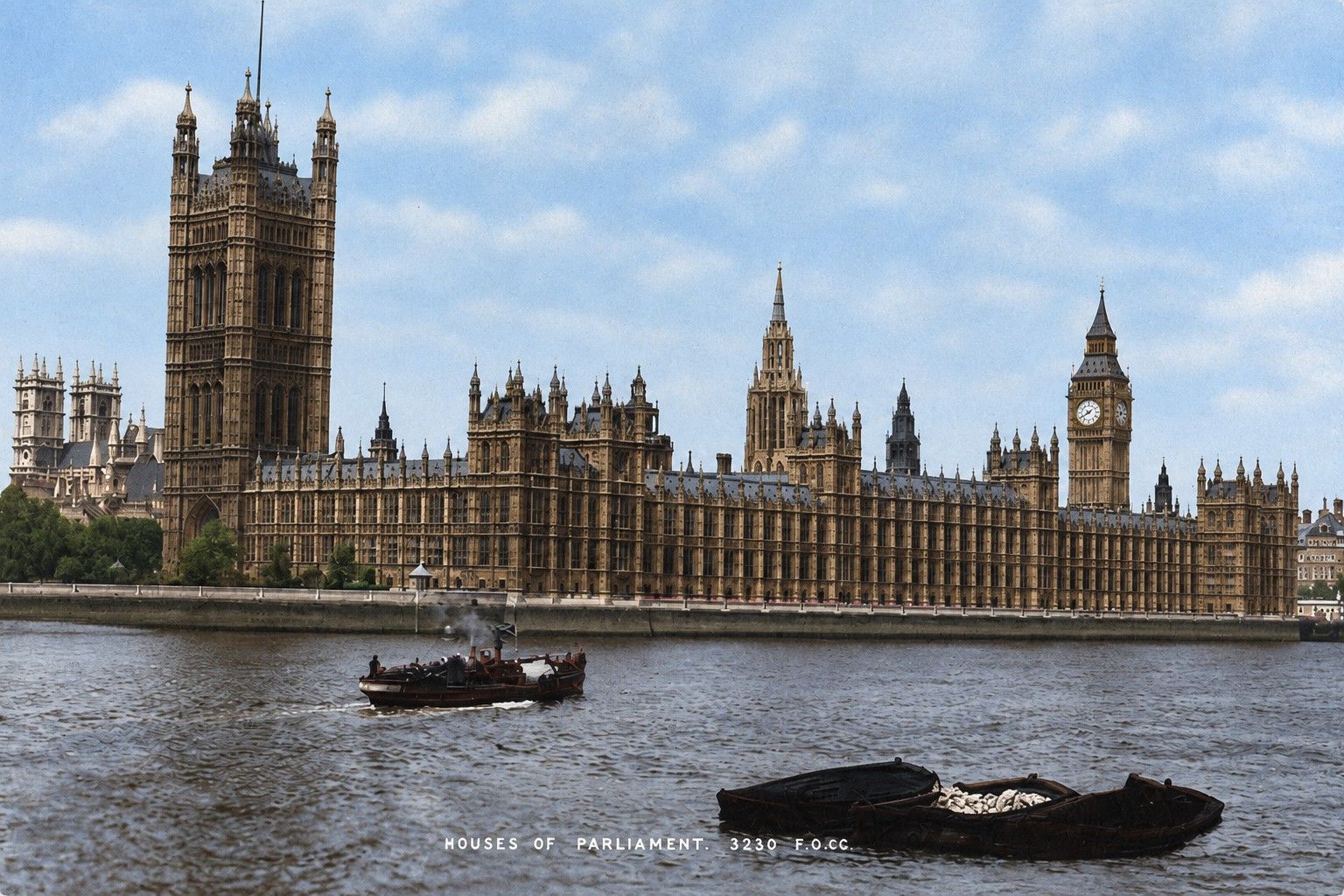
The Palace of Westminster and its towers seen from across the Thames.
The Houses of Parliament from across the Thames, London, about 1890. Colourised from original Library of Congress photograph. Library of Congress Prints and Photographs Division, LC-DIG-ppmsca-06813.

The House of Commons voted 223 to one this afternoon to give the Control of Employment Bill a second reading. The division was called at 16:24 GMT, two hours and twenty minutes after the debate opened.

The bill does not send anyone anywhere. It makes the hiring of workers covered by a ministerial order subject to the minister's consent, so that an employer cannot take on a man in a scheduled trade without it. Ernest Brown, the minister, said orders would at first cover only limited groups of highly skilled and vital workers. The purpose, in his words, is "to get the right labor for the right jobs". It has "no relation whatever to industrial conscription", he said.

Wire

Chamberlain: Britain will not attack civilians for terror, so long as Germany shows the same restraint

Allied Press Service
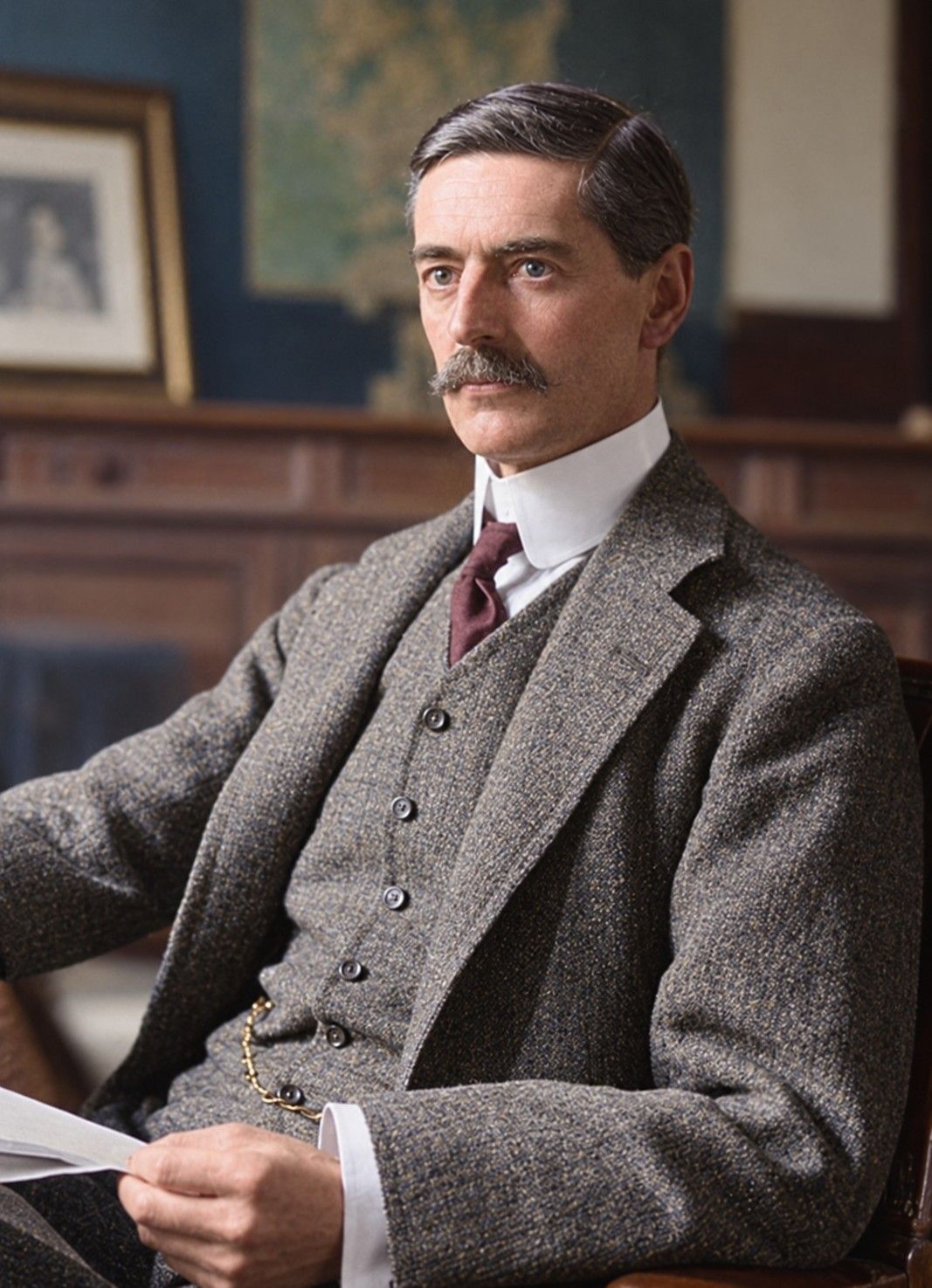
Neville Chamberlain in a dark suit and wing collar, looking towards the camera, in a studio portrait.
Neville Chamberlain, photographed between 1915 and 1920. Colourised from original Library of Congress photograph. Library of Congress, Bain News Service collection, LC-DIG-ggbain-23679. No known restrictions on publication.

Britain will never resort to "deliberate attack on women and children, or other civilians for purposes of mere terrorism", Neville Chamberlain told the House of Commons this afternoon.

The Prime Minister said the restrictions Britain places on its own operations depend in part on the enemy observing similar restraint. If that restraint is abandoned, he said, the Government reserves its freedom of action.

The statement came in answer to questions on German air attacks in Poland, shortly after the House met at 13:45 GMT.

Wire

Government counts 50,000 enemy aliens, most of them refugees, and will hear their cases one by one

Allied Press Service

About 50,000 enemy aliens are in Britain and about 35,000 of them are refugees, according to an official account of the Government's policy issued today.

There will be no general internment of the kind ordered in 1914, it says. Known Nazi agents and sympathisers are being segregated. The rest are to have their cases examined individually by local tribunals, which will recommend what is done in each.

In the meantime enemy aliens over 16 are registered and may not travel more than five miles from where they live.

The account says conditions differ from the last war because machinery for controlling aliens already exists and because many of those admitted came to Britain as fugitives from persecution.

Correspondent

Three hours on, Berlin's account of Gdynia is the only one there is

The Stockholm Observer
The Gdynia claim, 14 September 1939. Graphic by LIVE WW2. Graphic by LIVE WW2.

Berlin's announcement that German troops are in Gdynia and that the garrison is surrendering reached Stockholm this morning. As of 12:30 GMT nothing has come from the Polish side to confirm it, deny it or qualify it.

The two halves of the German statement are different kinds of claim. That troops have entered the town will be checkable within days by anyone who reaches the place. That the garrison is surrendering is a statement about what Polish soldiers are doing, and only the Poles can confirm it.

Whether Warsaw can answer at all, from a coast it may no longer be in contact with, cannot be told from here.

Wire

Berlin says its troops entered Gdynia this morning and the garrison is surrendering

Allied Press Service

German troops entered Gdynia at 09:15 GMT this morning, the German authorities announced in Berlin, and the Polish garrison of the port is surrendering. The announcement gives the time as 10.15 by the local clock.

It gives no strength for either side and does not say whether fighting continues elsewhere on the coast.

Nothing has been received from the Polish side. Warsaw has not answered the German claim, and no independent report from Gdynia has reached correspondents in Berlin.

Gdynia is Poland's main seaport, on the Baltic coast west of Danzig.

Wire

Catholic bishops declare for the war and call their people to national service

Allied Press Service

The Roman Catholic hierarchy of England and Wales has declared its support for Britain's cause and called on Catholics to take part in national service, a cable from London reports. The bishops speak of a "profound conviction in the justice of our cause".

The Church of Scotland is also reported to have pledged its support.

Correspondent

On the West Coast, 119 men have signed and 68 have seen the doctor

The Southern Cross

By this afternoon 119 men from the Grey district and Hokitika have enlisted for the Special Force at the Greymouth recruiting office, and the medical board has begun working through them.

Of the 68 examined by the time the Evening Star went to press, 48 passed fit. The other 20 were classed as temporarily unfit, which is not a refusal.

Yesterday's count here was 116 enlisted, 43 examined and 33 passed. Three men have come in since.

What the force is for, where it is going and when, the men are not told and the office does not say. The only question put to them in the room is medical.

Wire

Borah to broadcast for the arms embargo a week before Congress meets

Allied Press Service

Senator William Borah is to broadcast on Thursday evening in defence of the arms embargo, according to the programme published in Washington tonight. The title of the address is a plea to retain the embargo, which he says helps keep the United States out of war.

Borah has led the Senate's opposition to changing the neutrality law. He has not spoken publicly since the President summoned Congress.

The proclamation calling the session was issued on Wednesday and gives no reason for it. Congress meets at noon on 21 September.

The day in pictures

Neville Chamberlain in a dark suit and wing collar, looking towards the camera, in a studio portrait.
Neville Chamberlain, photographed between 1915 and 1920. Colourised from original Library of Congress photograph.Library of Congress, Bain News Service collection, LC-DIG-ggbain-23679. No known restrictions on publication.
The Palace of Westminster and its towers seen from across the Thames.
The Houses of Parliament from across the Thames, London, about 1890. Colourised from original Library of Congress photograph.Library of Congress Prints and Photographs Division, LC-DIG-ppmsca-06813.
Senator William Borah, seated, in a dark suit, in a Harris and Ewing studio portrait.
Senator William Borah of Idaho, Washington, 1938. Colourised from original Library of Congress photograph.Library of Congress, Harris & Ewing collection, LC-DIG-hec-27264. No known restrictions on publication.
The Gdynia claim, 14 September 1939. Graphic by LIVE WW2.Graphic by LIVE WW2.
Scotland's evacuation, as Colville told the Commons, 14 September 1939. Graphic by LIVE WW2.Graphic by LIVE WW2. Figures as given to the House of Commons by John Colville.

Where things stood at the start of the day

Poland
Warsaw and Modlin are under attack on Polish and German accounts that describe different sectors at different scales. Neither can be checked from outside.
The Western Front
British troops are in France and have not been in action; their strength and whereabouts are withheld. The French advance in the Saar is described in London as local and successful, without particulars.
Casablanca
The French Navy has announced the loss of a cruiser it names as La Tour d'Auvergne to an internal explosion on Wednesday morning. No casualty figure has been given and an inquiry is expected.
Washington
Congress is summoned for noon on 21 September. The President's proclamation gives no reason.
Wardha
The Congress Working Committee has been sitting since Sunday on India's position in the war. It has published nothing.
Whitehall
Service officers now sit inside the Ministry of Information to clear war news at source. The arrangement has not yet been tested by an announcement.