Skip to the day
LiveWW2The Second World War, in real time
Day 5
Tuesday 5 September 1939

Athenia survivors come ashore at Greenock while London and Berlin give incompatible accounts of the same air attack

From the LIVE WW2 feed

The day in dispatches

Filed through the day, as it happened
Newest first
Summary

What we know at the close of the fifth day

At the close of the fifth day, the position is this. A first correspondent's account of the fall of the Polish Post Office in Danzig reached the outside world overnight, filed with German permission. Warsaw's General Staff has acknowledged abandoning Częstochowa, with fighting continuing toward Kraków.

In Cape Town, Hertzog resigned this morning and General Smuts has been asked to form a government. The Union has refused neutrality and is not at war tonight.

The Ministry of Information issued its official account of Monday's air attack on the German fleet, claiming severe damage; Berlin's account of the same raid agrees with London's on almost nothing. Survivors of the Athenia came ashore at Greenock today. Estimates of the missing still differ by about 200. France reports local advances across the German frontier that cannot be checked from Paris.

President Roosevelt signed the proclamation of American neutrality this afternoon. The arms embargo requires a second instrument, which he said would follow a White House conference this evening.
Editorial

Five days in, the Empire has answered six different ways

The London Sentinel

South Africa replaced its government today. Hertzog resigned this morning rather than carry a policy his own parliament rejected by 13 votes, and General Smuts has been asked to form a ministry. The Union has refused neutrality. It is not yet at war.

Set that beside the rest of the week. Australia entered the war in a sentence from Menzies: Britain had declared, and as a result Australia was at war too. New Zealand made the same decision within hours and dated its declaration, deliberately, to the minute Britain's began. India was declared at war by the Viceroy's proclamation, without one elected Indian being asked. Ireland has said it will stay out. Canada has recalled its parliament and will vote next week, and until that vote Canada is not at war.

Editorial

The only facts this paper can put beyond dispute today were all signed at a desk

The Imperial Review

This column has spent years reading official documents for what they avoid saying. It does not usually produce a day like today.

Consider the events on offer. A correspondent's account of a post office falling in Danzig, filed by a man who went in with German permission. Two governments' accounts of one afternoon over Wilhelmshaven, agreeing on the date and nothing else. Two estimates of the Athenia's missing, two hundred apart. French penetrations that grow more detailed the further from the frontier you ask.

Four events. None can be established tonight by anyone who was not there.

Now the paper. The President declared the United States neutral. Hertzog resigned; Smuts was asked to form a government. Two Bills, one registering every person in the United Kingdom and one prohibiting trade with the enemy, received Royal Assent between lunch and dinner.

Correspondent

Still no embargo, two days on

The New York Register

On Sunday night the President told the country it would remain a neutral nation and said nothing about the arms embargo. Two days later he still has not imposed it.

He signed the general neutrality proclamation shortly after one o'clock. It does not touch the export of arms.

The embargo needs a different instrument, issued under the Neutrality Act. The President told his press conference he would take action after a White House conference called for half past four. That conference is under way; nothing has come out of it.

The embargo is not his to choose. The Act says that once a President finds a state of war exists, he shall proclaim it, and upon that proclamation the export of arms becomes unlawful. So it is coming.

Communiqué

Roosevelt proclaims neutrality; arms embargo still unsigned

The New York Register
Photograph: Harris & Ewing, Library of Congress Prints & Photographs, LC-DIG-hec-47503. No known restrictions.

President Roosevelt signed the general proclamation of United States neutrality shortly after one o'clock this afternoon. It does not impose the arms embargo. That needs a separate instrument under the Neutrality Act, and he has not signed it. He told his press conference he would act after a White House conference called for half past four. Nothing had been announced when this was filed.

Official textThe White House, Office of the President of the United States

Proclamation 2348, Neutrality of the United States, 5 September 1939. Extract.

By the President of the United States of America
A PROCLAMATION
Whereas a state of war unhappily exists between Germany and France; Poland; and the United Kingdom, India, Australia and New Zealand;
And Whereas the United States is on terms of friendship and amity with the contending powers, and with the persons inhabiting their several dominions;
And Whereas there are nationals of the United States residing within the territories or dominions of each of the said belligerents, and carrying on commerce, trade, or other business or pursuits therein;
And Whereas there are nationals of each of the said belligerents residing within the territory or jurisdiction of the United States, and carrying on commerce, trade, or other business or pursuits therein;
And Whereas the laws and treaties of the United States, without interfering with the free expression of opinion and sympathy, nevertheless impose upon all persons who may be within their territory and jurisdiction the duty of an impartial neutrality during the existence of the contest;
And Whereas it is the duty of a neutral government not to permit or suffer the making of its territory or territorial waters subservient to the purposes of war;

The proclamation then sets out seventeen categories of act forbidden within United States territory, among them enlisting in a belligerent's service and fitting out a vessel for a belligerent. It then turns to what belligerent warships may do in American waters.

The maximum number of ships of war belonging to a belligerent and its allies which may be in one of the ports, harbors, or roadsteads subject to the jurisdiction of the United States simultaneously shall be three.
No ship of war of a belligerent shall be permitted, while in any port, harbor, roadstead, or waters subject to the jurisdiction of the United States, to make repairs beyond those that are essential to render the vessel seaworthy and which in no degree constitute an increase in her military strength. Repairs shall be made without delay. Damages which are found to have been produced by the enemy's fire shall in no case be repaired.
Done at the city of Washington this fifth day of September in the year of our Lord nineteen hundred and thirty-nine, and of the Independence of the United States of America the one hundred and sixty-fourth.
FRANKLIN D. ROOSEVELT. By the President: CORDELL HULL, Secretary of State.

The recitals are reproduced in full and consecutively. The two passages that follow the descriptive paragraph are drawn from separate parts of a long instrument and are not consecutive.

Proclamation 2348, issued 5 September 1939. Text: Papers Relating to the Foreign Relations of the United States, 1939, volume I, document 729, pages 685 to 692. Cross-checked against the American Presidency Project transcript.

Correspondent

Paris says almost nothing; New York has the details

The Paris Dispatch

What you are reading has been through the censor. Worth saying again, because tonight it explains something.

The Ministry of War's communiqué this evening is almost empty. Operations continue. No sector named, no formation named, no result given.

Meanwhile reports of what French forces have achieved on German soil grow more specific with distance from the frontier. In the eastern departments people say very little. In Paris the accounts are fuller. By the time they reach New York there are depths in kilometres and named villages.

That is the wrong direction. Information does not improve as it travels.

The High Command has chosen silence. That is defensible; this correspondent makes no criticism of it. Operations in their opening days are what a general staff should not describe. But silence has consequences.

Correspondent

Berlin says five British bombers were shot down. London, which knows the number, has said nothing.

The Imperial Review

There are now two accounts of Monday afternoon and they do not agree. Yesterday there was one, which agreed with itself.

Consider what each side is in a position to know.

A bomber crew assesses damage from an aircraft moving fast, at low altitude, under anti-aircraft fire, in weather the Ministry's own text calls very unfavourable, for the few seconds the target is visible. Then it leaves.

Berlin, on the question of damage, knows everything. The ships are theirs, in a German anchorage, and any naval officer can walk down a mole and look at a hull. Germany will not photograph its battleships for anybody. So the party who actually knows produces the account that cannot be tested, and the party who does not know produces the one that can.

Wire

Berlin says the RAF raid achieved nothing and claims five bombers shot down

Allied Press Service

Germany has given its own account of Monday afternoon's attack on German warships at Wilhelmshaven and Brunsbüttel, and it does not agree with London's.

The German account states that the attacking aircraft achieved nothing of consequence against the ships, and claims that five British bombers were brought down.

It also states that anti-aircraft batteries and German fighters engaged the attacking force, which London's account this morning acknowledged in general terms.

London claimed several direct hits and severe damage to a battleship at each location. It admitted casualties without a figure and has not said how many aircraft failed to return.

The two accounts cannot both be right about the ships.

Correspondent

Everyone in Britain is about to be counted and carded

The London Sentinel

Sometime in the next few weeks a man will knock on your door with a form.

He will want your name, address, age, occupation and marital condition, and the same for everybody who slept in the house that night. Then you will be issued with a card, and expected to have it on you.

That is what the House agreed to this afternoon. Both Bills have now been through all their stages in both Houses and received the Royal Assent, on the same day.

It went through without a fight. There was a register in the last war, and the register is how you ration food: you cannot ration to people you have not counted.

Wire

Commons passes national register and trading-with-enemy bills in one day

Allied Press Service

The House of Commons has taken powers to register every person in the United Kingdom.

The National Registration Bill completed its Commons stages this afternoon and has gone to the Lords. It provides for a register of the whole population and the issue of identity documents.

The Trading with the Enemy Bill went into committee shortly after half past five and is before the House now.

Neither was contested at length. Both belong to the emergency legislation brought forward since Friday, most of it passing all stages in a single sitting.

A register was compiled in the last war. It has been more than twenty years since anyone here was required to carry a document establishing who they were.

Summary

Athenia's missing put at 300 by one count and 500 by another

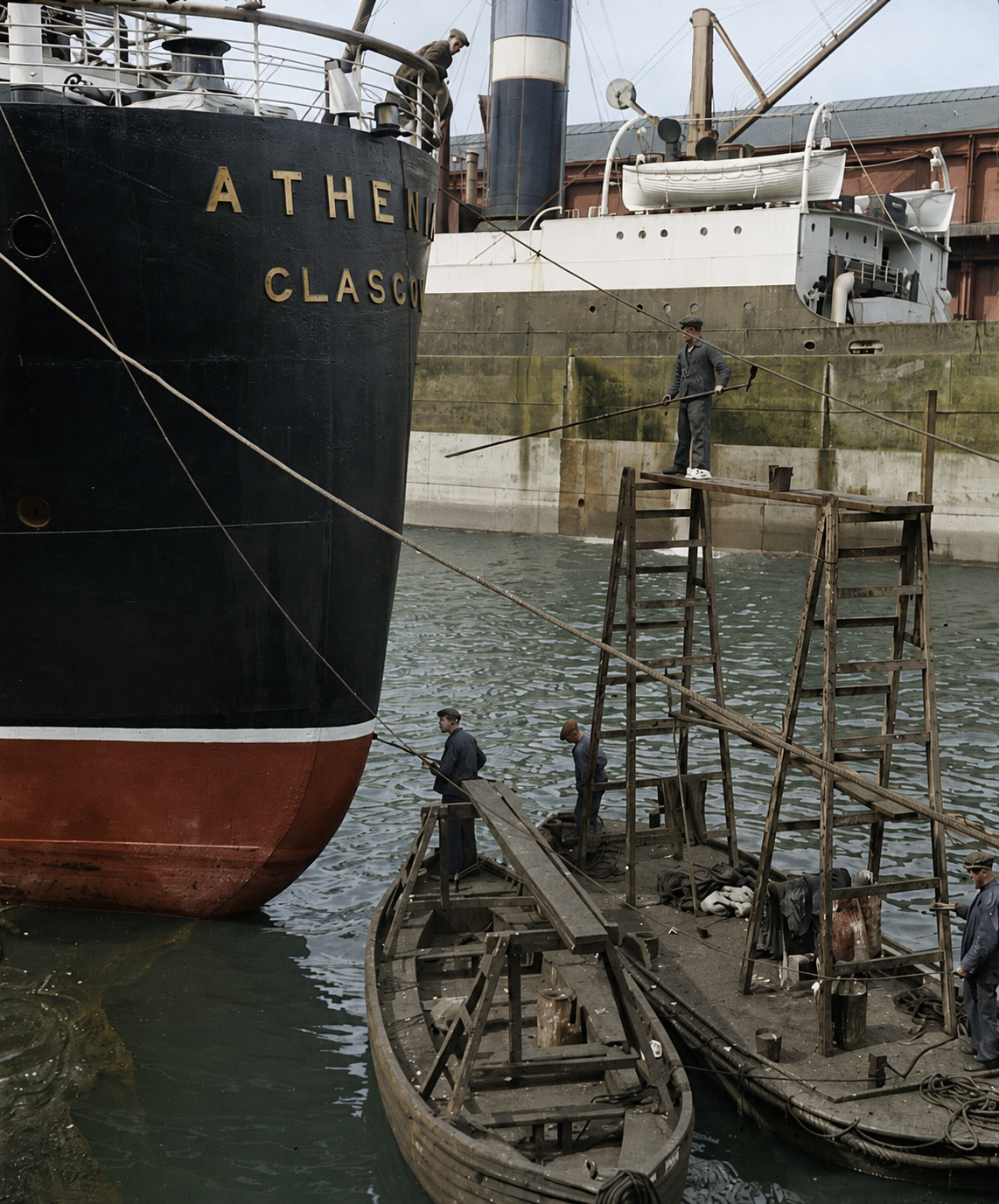
The stern of the liner Athenia at a Glasgow dock, her name and port of registry visible, with workers on wooden barges alongside.
Photograph: Paul Vanderbilt, 1937. Library of Congress Prints & Photographs. No known restrictions.

Two figures for the number unaccounted for from the Athenia are on the wires today. One puts it at about 300. Another at around 500. Both are estimates. Neither is attributed to anyone who has completed a count.

There is a reason no reliable figure exists. The liner carried about 1,400 passengers. Survivors were picked up by merchant ships of several flags and by British destroyers, and those vessels are making for different ports on different timetables. Some landed at Greenock this morning. Others have not landed anywhere.

The distinction being lost is this. A person unaccounted for is a person whose name has not appeared on a list. That is not the same as a person who has died.

No authoritative death toll has been given. Figures are circulating: survivors have repeated a rumour of ninety lost, and some accounts speak of people who died aboard the rescue ships. None comes from anyone in a position to have counted. The First Lord, asked in the Commons yesterday how many had died, said he had given the House everything he had.

Eyewitness

They came ashore at Greenock in what they were wearing

The London Sentinel

The destroyers came up the Clyde in the early hours. Survivors of the Athenia began coming off them onto the quay this morning.

Most walked. Some were carried on stretchers. There were men from the ships carrying children who were not theirs.

The first thing you notice is the clothes. A woman came down the gangway in a naval duffel coat with the sleeves turned back three times, over something that had been an evening dress. A man walked past in oilskins and no shoes. A boy of about eight wore a jacket with a Royal Navy button and nothing under it.

Correspondent

One crew was put in boats, the other was hit without warning

The Atlantic Ledger

Three merchant losses were announced today, two German and one British, and between them they show two quite different ways of sinking a ship.

Off the River Plate on Sunday, a British cruiser stopped a German freighter, put her crew into boats, and sank her with gunfire. Everyone lived. That is prize law as written, and it is the assumption underneath marine war-risk cover: a merchant ship is property, and the people aboard are not the target.

Two hundred miles north-west of Ireland on Sunday night, if the First Lord's account is accurate, a liner was hit without warning in the dark. The government it accuses disputes it, and nothing has settled the question.

Wire

Montevideo reports Ajax sinking; Cunard's Bosnia lost, crew rescued

Allied Press Service

The crew of the German freighter Olinda has come ashore here after their ship was stopped and sunk by the British cruiser Ajax.

The crew were ordered into their boats before she was sunk by gunfire. All are reported safe. The sinking was on Sunday; the account reached the wires today.

Reports here call the Olinda the first enemy merchant ship destroyed since hostilities began.

The German vessel Carl Fritzen is also officially reported sunk, her crew safe; the circumstances are not established here.

In London, the Ministry of Information has announced the loss of the Cunard cargo ship Bosnia, without saying what sank her. The Norwegian tanker Eidanger took off her crew; one fireman is reported dead.

Correspondent

Britain has agreed to buy Australia's whole wool surplus for the duration

The Southern Cross

Two days after Australia entered the war, Britain has agreed to buy the country's exportable surplus of wool and foodstuffs. Not a share of it. The surplus.

The arrangement is described as running for the duration. No price has been announced. What has been settled is the shape: one buyer, one seller, the whole of the clip. Wheat is separate.

This is not charity. Australia grows more wool than it can use and Britain needs more than it can grow. What has changed is that the market in between has gone.

Before Sunday a clip went to auction and buyers came from Britain, the Continent, Japan and the United States. The German buyers have gone. The Continental buyers are in countries that may not be able to take delivery, or pay, or find a ship. What remains is one customer who knows how few alternatives the seller has.

Wire

Australia orders militia call-up; Britain takes the wool and food surpluses

Allied Press Service

Australia has ordered the mobilisation of its militia.

The announcement made this evening states that militiamen are to be called up in successive drafts of 10,000, each serving sixteen days, principally to provide guards for vulnerable points.

No total figure has been given for the number the scheme will involve, and no date for the first draft.

Separately, Britain will purchase Australia's exportable surpluses of wool and foodstuffs. Terms and prices have not been disclosed.

Wheat is handled under a separate arrangement.

Communiqué

London says the RAF hit two German battleships and admits casualties without a figure

The Imperial Review

The Ministry of Information has issued the official account of Monday afternoon's attack on German naval units at Wilhelmshaven and Brunsbüttel, the first British bombing attack of the war. It claims severe damage and admits casualties without a figure. It is the attacking side's own account, compiled from what the crews reported on return. The text is reproduced as issued, including its spellings.

Official textMinistry of Information

Ministry of Information statement on the attack on the German fleet, 5 September 1939

Ministry of Information states:
"Successful attack carried out yesterday afternoon by units of R.A.F. on vessels of German fleet at Wilhelshafen and Brunsbuttel at entrance of Kiel Canal.
"Several direct hits with heavy bombs were registered on a German battleship in Schilling Roads, off Wilhelmshafen, which resulted in severe damage.
"At Brunsbuttel an attack was carried out on a battleship lying alongside the mole causing heavy damage. During the operation, which was carried out in very unfavourable conditions, our aircraft encountered air attack and anti-aircraft fire, resulting in some casualties."

Ministry of Information statement, issued 5 September 1939. Contemporary press reproduction: International Bomber Command Centre Digital Archive, John Henry Hanne Scrapbook, item SHanneJH564212v10002.

Correspondent

A government changes hands without an election

The Southern Cross
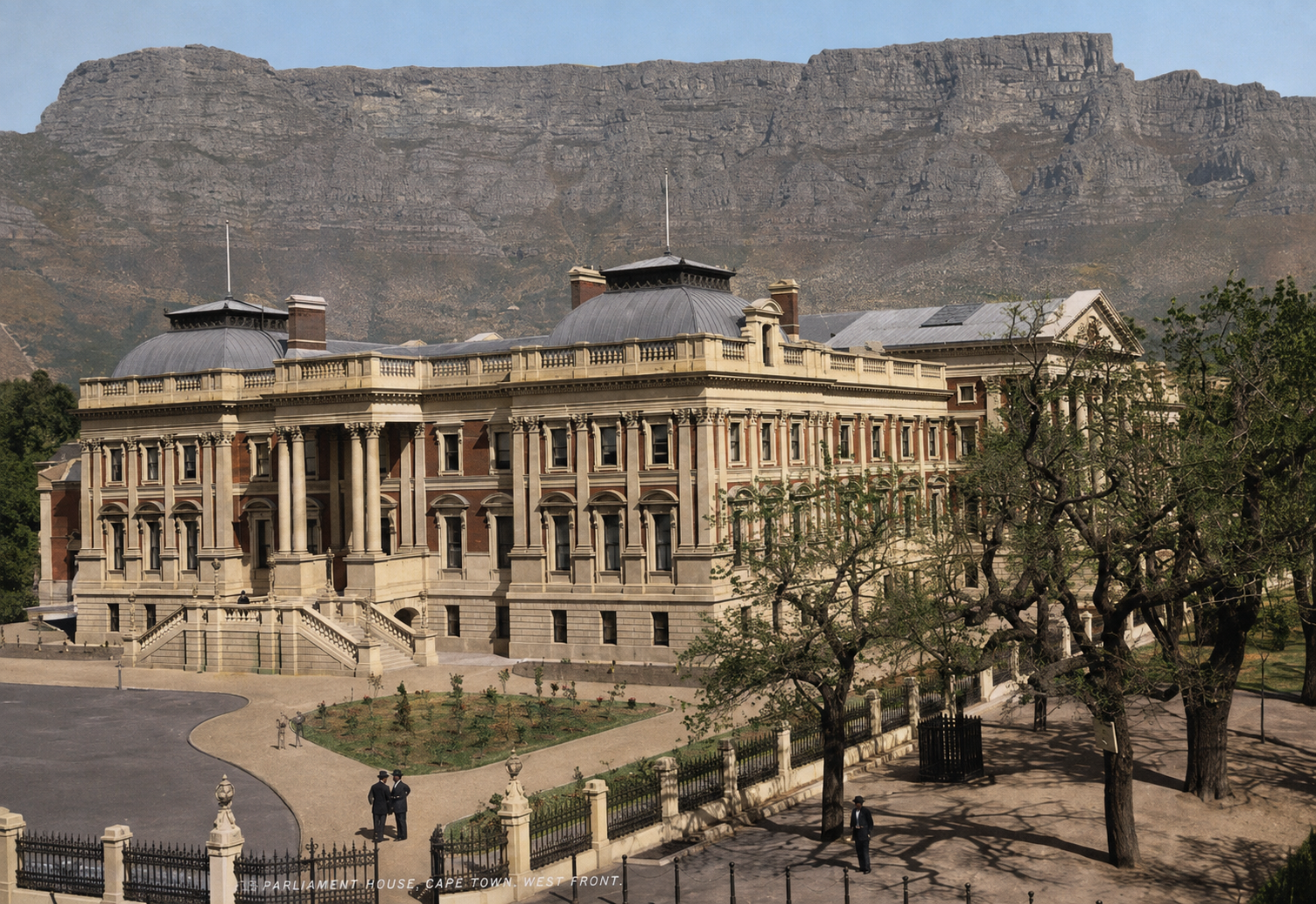
Parliament House in Cape Town seen from the west, Table Mountain rising behind it, in a photograph from around 1890.
Photograph: Rijksmuseum, Amsterdam, c. 1890. Colourised.

The Union is getting a new Prime Minister today and nobody voted for him.

That is not a criticism. It is what the constitution allows, and worth setting out, because readers across the Commonwealth will be asked to accept a good deal that has been arranged rather than chosen.

Hertzog moved on Monday that relations with all belligerents continue unchanged. His deputy moved the opposite. The amendment carried by 80 to 67. Hertzog asked for a dissolution, and was refused.

Every step is proper. A Governor-General need not grant a dissolution to a Prime Minister who has just lost a division when somebody else commands a majority. The effect is that a country has changed its position on the largest question available to it, and is changing its head of government, inside forty-eight hours and without an election.

Wire

Hertzog resigns; Smuts asked to form a government

Allied Press Service

General Hertzog has resigned as Prime Minister of the Union of South Africa. General Smuts has been asked to form a government.

Hertzog's motion that the Union remain neutral was defeated in the House of Assembly on Monday by 80 votes to 67. He asked the Governor-General for a dissolution of parliament. It was refused, and he has now submitted his resignation.

Smuts, until Monday his deputy, is expected to take office today.

The amendment carried in his motion's place breaks relations with Germany, refuses neutrality, and provides that forces should not be sent overseas as in the last war.

Monday's vote refused neutrality; a declaration of war would be a further step, and Smuts takes office today.

Situation map

Where the Polish staff says it has given ground

Where the Polish staff says it has given ground. Map: LIVE WW2.
Wire

Warsaw bombed again; Polish staff admits Grudziądz and Bydgoszcz abandoned

Allied Press Service
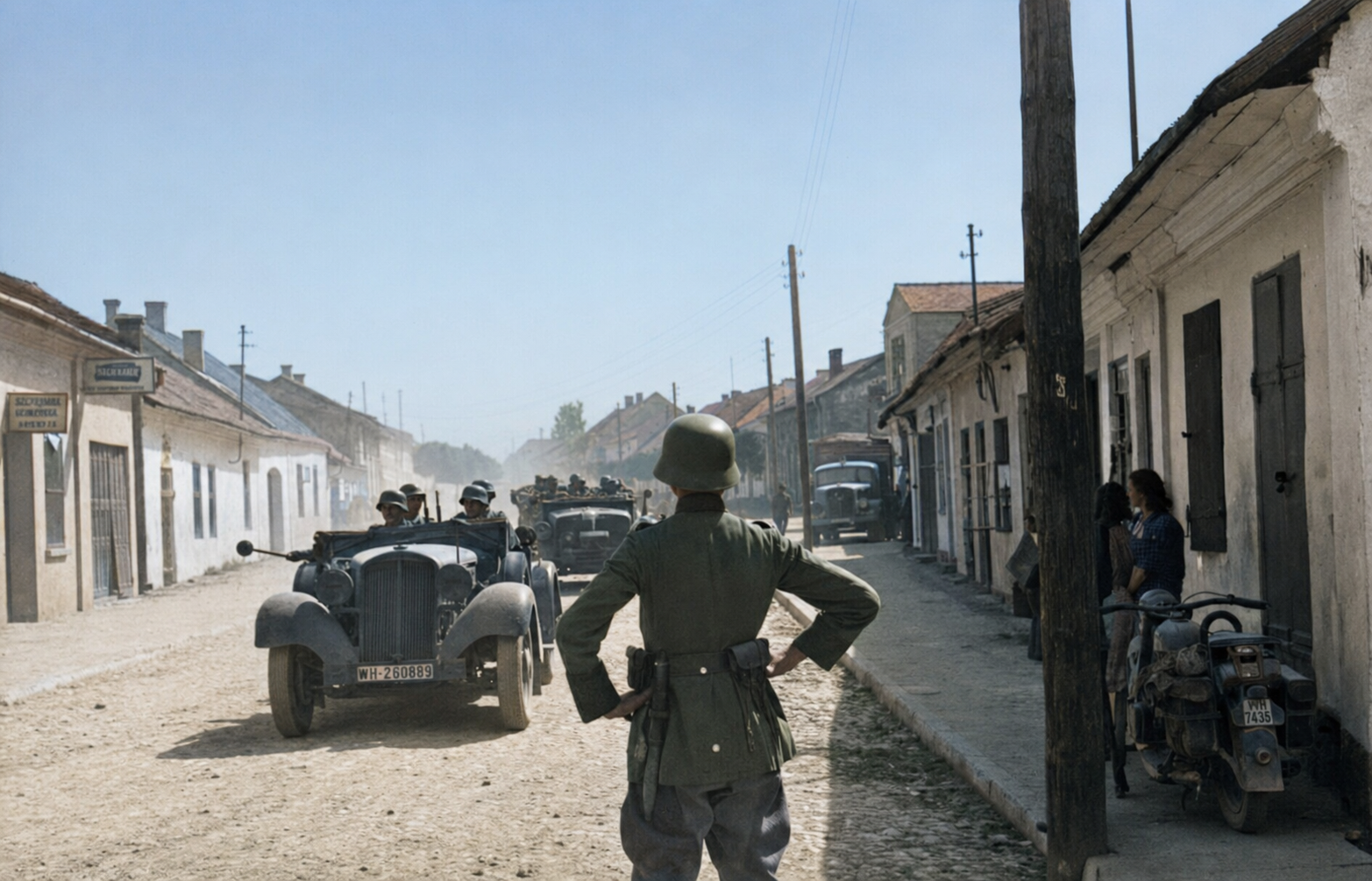
A German soldier directs a column of open military cars along the main street of a small Polish town, dust rising behind the vehicles.
Bundesarchiv, Bild 101I-012-0009-28A / CC BY-SA 3.0 DE. Colourised derivative by LIVE WW2, released under the same licence.

The Polish general staff has acknowledged that its forces have abandoned Grudziądz and Bydgoszcz after severe fighting.

The staff has also acknowledged abandoning Częstochowa, to the south. Both admissions come from the side that gains nothing by making them.

Both towns lie in the Polish Corridor. The communiqué does not say where the forces that held them have gone.

Warsaw has been bombed again. Reporting from the city puts the attacking force at approximately 70 aircraft. The Polish command claims 17 German aircraft were brought down for the loss of eight Polish machines. Those figures are claimed by one side and have not been checked.

German accounts describe pressure farther south, toward Kraków.

Correspondent

The first account of the Post Office came out of Danzig with German permission

The Stockholm Observer

An account of the Polish Post Office has reached this office. It is the answer this desk has waited four days for, which is the reason to test it rather than the reason not to.

A United Press correspondent in Danzig has filed the first report from anyone inside the city since Friday. He says German forces overcame the defenders and that the fighting there is finished.

Yesterday this office set out why nothing from Danzig could be relied on. The city has been under German control since Friday. The correspondent went in on German terms and came out on them, and saw what he was shown.

Wire

Danzig: Post Office reported taken; Westerplatte still holding out

Allied Press Service

A United Press correspondent in Danzig reports that German forces have overcome the defenders of the Polish Post Office, using artillery and fire against the building.

It is the first account to reach this office from anyone inside the city since the fighting began on Friday.

The correspondent puts the number of defenders at about 70 and says around 20 were killed. Both figures are his, and no other source has confirmed them.

Most of those inside were postal staff. The defence is reported to have been organised by a reserve officer sent to the building beforehand.

At Westerplatte, the Polish garrison in the harbour is reported still holding out on the fifth day.

The day in pictures

A German soldier directs a column of open military cars along the main street of a small Polish town, dust rising behind the vehicles.
A German motorised column in a Polish town, in a photograph issued by a German propaganda company, September 1939. Colourised from original Bundesarchiv photograph.Bundesarchiv, Bild 101I-012-0009-28A / CC BY-SA 3.0 DE. Colourised derivative by LIVE WW2, released under the same licence.
Where the Polish staff says it has given ground: the map at 04:00 GMT.Map: LIVE WW2.
Parliament House in Cape Town seen from the west, Table Mountain rising behind it, in a photograph from around 1890.
Parliament House, Cape Town, photographed around 1890. The Assembly's vote against neutrality on Monday ended Hertzog's premiership; Smuts was asked to form a government today. Colourised from the original Rijksmuseum print.Photograph: Rijksmuseum, Amsterdam, c. 1890. Colourised.
The stern of the liner Athenia at a Glasgow dock, her name and port of registry visible, with workers on wooden barges alongside.
The Athenia at Glasgow in the summer of 1937, dock workers repainting her stern. Colourised from original Library of Congress photograph.Photograph: Paul Vanderbilt, 1937. Library of Congress Prints & Photographs. No known restrictions.
The last page of the American neutrality proclamation, signed and sealed, Washington, 5 September 1939. From the Harris & Ewing glass negative.Photograph: Harris & Ewing, Library of Congress Prints & Photographs, LC-DIG-hec-47503. No known restrictions.

Where things stood at the start of the day

Poland
The offensive goes into a fifth day: Berlin says frontier resistance has been broken, while Warsaw calls the withdrawal planned and reports counter-attacks. Warsaw has been bombed again, Westerplatte is still under fire, and nobody can say who holds the Post Office in Danzig.
The Atlantic
Churchill told the Commons that the Athenia was torpedoed without warning, and Berlin denies that any German submarine was near her. Rescue is continuing, survivors are still being landed, and there is no reliable count of the dead.
The air war
British aircraft have bombed German warships at Wilhelmshaven and Brunsbüttel, the first British bombing attack of the war. London claims direct hits and severe damage to two battleships and admits some casualties, and nobody in Britain can yet check the claim.
Britain and France
Britain has brought in contraband control and created a Ministry of Economic Warfare, and convoy has started on one route with a general system being organised. France says operations have opened by land, at sea and in the air, and has said nothing further.
The Empire
Australia, New Zealand and India are at war alongside Britain, and South Africa's parliament has rejected neutrality by 80 votes to 67. The Union is not yet at war, and Canada's parliament meets on 7 September.
Neutral nations
The United States has restated its neutrality and says a formal proclamation is being prepared. Japan says it will stay out of the European war, Ireland is neutral, and Italy is not a belligerent.
Background

Neutrality is a legal act, not a mood

The President signed four documents today, several hours apart, and the relationship between them is not obvious from any single one.

The first declares the United States neutral in the war between Germany and France; Poland; and the United Kingdom, India, Australia and New Zealand. This is the general international-law instrument. It sets out what belligerent warships may do in American waters, what American nationals may not do, and what the United States understands its own obligations to be. It does not impose the arms embargo.

The second does. It is issued under the Neutrality Act itself, and it proclaims the statutory finding that a state of war exists. The Act provides that upon that proclamation the export of arms, ammunition and implements of war to those states becomes unlawful. So the embargo has a specific legal parent, and it is not the first proclamation.