Skip to the day
LiveWW2The Second World War, in real time
Day 6
Wednesday 6 September 1939

Berlin announces Kraków, Britain revises the Athenia's count upward in gravity while narrowing it in number, and the only government to admit an error admits it about an air-raid siren

From the LIVE WW2 feed

The day in dispatches

Filed through the day, as it happened
Newest first
Summary

What we know at the close of the sixth day

Allied Press Service

At the close of the sixth day, the position is this.

The First Lord of the Admiralty has told the Commons that 1,418 people were aboard the Athenia and about 125 are unaccounted for. He said the attack came without warning from a submarine and did not name its nationality. He said the disaster may prove greater than earlier reports indicated.

Berlin has announced the capture of Kraków. No independent account of the city has reached this office.

Warsaw is preparing to be defended, and Polish radio has asked citizens to bring spades. Six days after the shelling of Westerplatte began, neither side has announced that the position has fallen.

Air-raid sirens sounded over London this morning. No damage was reported. The Home Secretary has told the Commons that the warning was misread as the all-clear.

South Africa is at war with Germany from today. Romania has resolved on strict neutrality. Iraq has broken relations with Germany without declaring war.

The arms embargo was signed in Washington last night. South Africa and Canada are not named in it.

The French communiqué reports local advances on the frontier and leaves it at that.
Editorial

Six days in, certainty is outrunning evidence

The Imperial Review

Consider what the governments told us today, and how much of it anyone can test.

Berlin announced that it holds Kraków, and gave a detailed account of how the city was taken. Paris reported local advances and named no sector, while accounts carrying named villages and distances in kilometres went out from the same city under the same censorship, attributed to nobody. London told the Commons that the Athenia was attacked without warning by a submarine, on sworn evidence, and did not say whose submarine.

Set beside that, the things this newspaper can state without qualification. A gazette in Pretoria put the Union of South Africa at war with Germany. A proclamation signed in Washington last night made the sale of American arms to the belligerents unlawful. A Crown Council in Bucharest resolved on strict neutrality. Each is a document, each is public, each will read the same tomorrow.

Correspondent

The embargo lands, and two Dominions are still not on the list

The New York Register
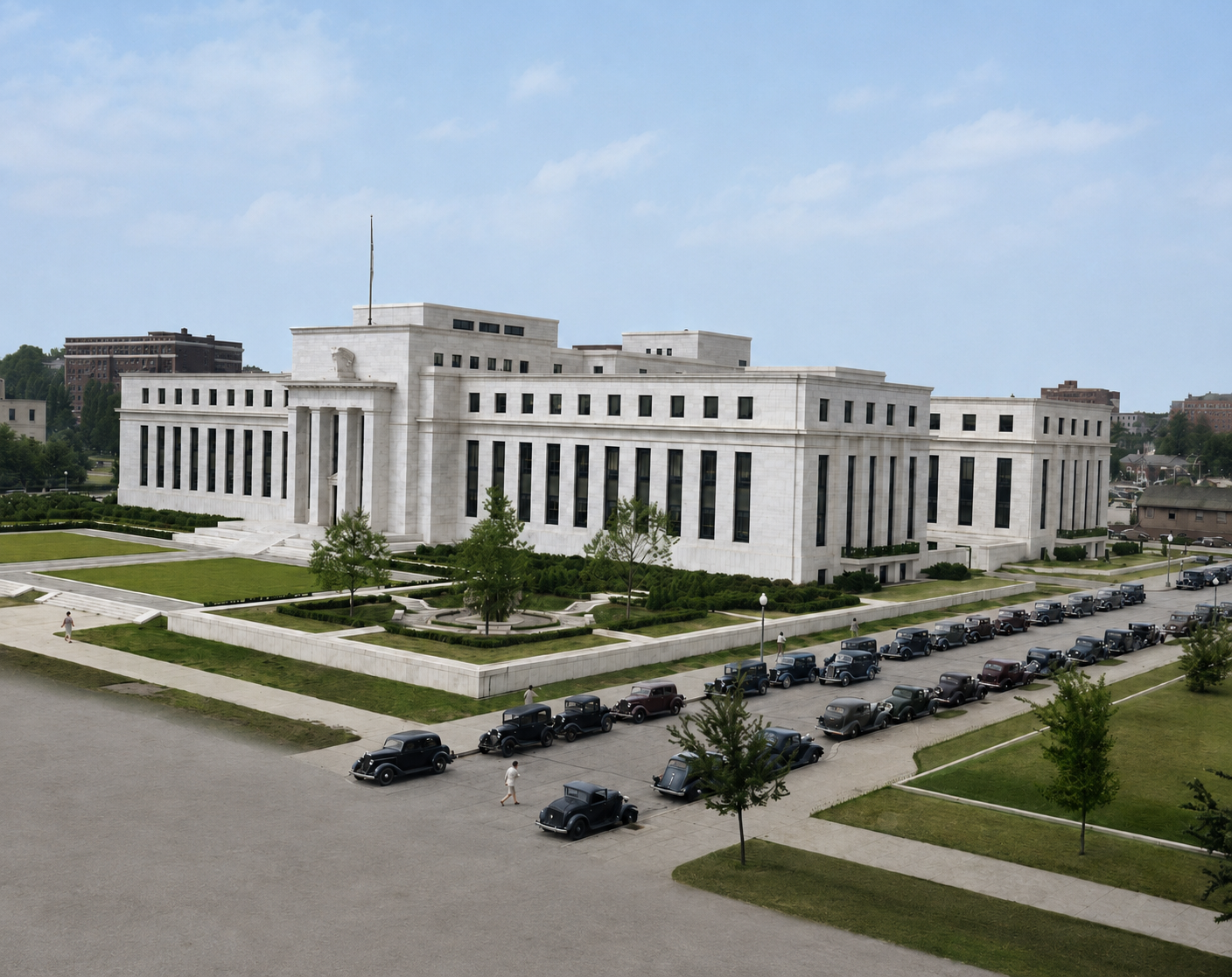
The white marble Federal Reserve Board Building in Washington, photographed from across an open space in about 1937.
The Federal Reserve Board Building, Washington, photographed in about 1937. Colourised from original Library of Congress photograph. Photograph: Harris & Ewing. Library of Congress Prints & Photographs, LC-DIG-hec-23266, c. 1937. No known restrictions.

The arms embargo was signed here last night, two days after the President told the country it would stay neutral and said nothing about arms.

It bans the export of American arms, ammunition and implements of war to France, Germany, Poland, and the United Kingdom, India, Australia and New Zealand. Those seven are the belligerents as this government recognizes them.

South Africa proclaimed a state of war with Germany today. It is not on the list. Canada's parliament meets tomorrow, and Canada is not on the list either.

So the embargo does not yet reach a country that went to war this afternoon, while it reaches one that has been at war since Sunday. That is not an oversight. The State Department works from what governments declare, and it takes time for a declaration in Pretoria to become an instrument signed in Washington.

Correspondent

The communiqué says local; the wires say Germany

The Paris Dispatch

Yesterday this office described a pattern: accounts of what French forces have done on German soil grow more specific the further you get from the frontier. It seemed worth saying once.

It is worth saying again tonight, because the gap has widened rather than closed, and a pattern that repeats on consecutive days is not an oddity of one evening's copy.

This morning's communiqué says local advances. Two words, no sector, no unit.

The accounts going out to the wire desks tonight have French troops across the frontier and aircraft over the fortified zone. Some carry depths. One carries a village.

Correspondent

Soviet and Japanese forces are fighting in Mongolia, and neither government calls it war

The Far Eastern Courier

The Soviet Union and Japan have been fighting each other on the Mongolian frontier since May, with artillery and aircraft, and neither government calls it a war.

There has been no declaration. There is no armistice. The fighting was going on this week and it is going on now.

The European papers reaching this desk carry the Polish frontier on every page. They do not carry this one at all, and they have not since Friday.

That is understandable and it is still worth marking. Two great powers are in the field against each other in Asia. One of them has just signed a pact with Germany. What that pact means for the other has not been explained by anybody in Tokyo, and this office would not print a guess.

Wire

Romania's Crown Council resolves on strict neutrality

Allied Press Service

Romania's Crown Council met at Cotroceni Palace this afternoon and resolved unanimously on strict observance of the rules of neutrality established by international convention.

The communiqué was issued here this evening. It also approves diplomatic steps already taken and military measures for the defence of the frontiers.

The meeting began at four o'clock, under the King.

Wire

Home Secretary: the warning was mistaken for the all-clear

Allied Press Service

Sir John Anderson has told the Commons that this morning's air-raid warning was misunderstood by street personnel and signalled as the all-clear.

The warning reached them late. The whistles that followed were understood to mean the opposite of what they meant.

The Home Secretary said he would try to eliminate the problem. He did not say when, or how.

MPs had pressed him on whether Londoners could tell a warning from an all-clear at all.

Wire

Simon moves £280 million of Bank gold to the Exchange Account

Allied Press Service

The Chancellor of the Exchequer has told the Commons that almost all the gold held in the Bank of England's Issue Department is being transferred to the Exchange Account today.

Sir John Simon put the value of the transfer at about £280 million. The fiduciary note issue rises to £580 million as a result.

He said the purpose is to concentrate the Government's foreign resources in one reserve.

The transfer was announced as taking effect today.

Correspondent

The count narrows and the government says it may be worse

The Atlantic Ledger

Yesterday there were two figures for the Athenia's missing, about 300 and about 500, and neither came from anyone who had counted. Today there is one figure, about 125, and it comes from sworn statements and a passenger list.

That is a firmer number. It is not better news, and the First Lord said so himself: the disaster may prove greater than earlier reports indicated.

The reason is in how the two kinds of figure are made. Yesterday's were estimates of the missing, made before most of the rescue ships had landed anybody. Today's follows a reconciliation against the ship's own list.

Wire

Churchill: 1,418 aboard the Athenia, about 125 unaccounted for

Allied Press Service
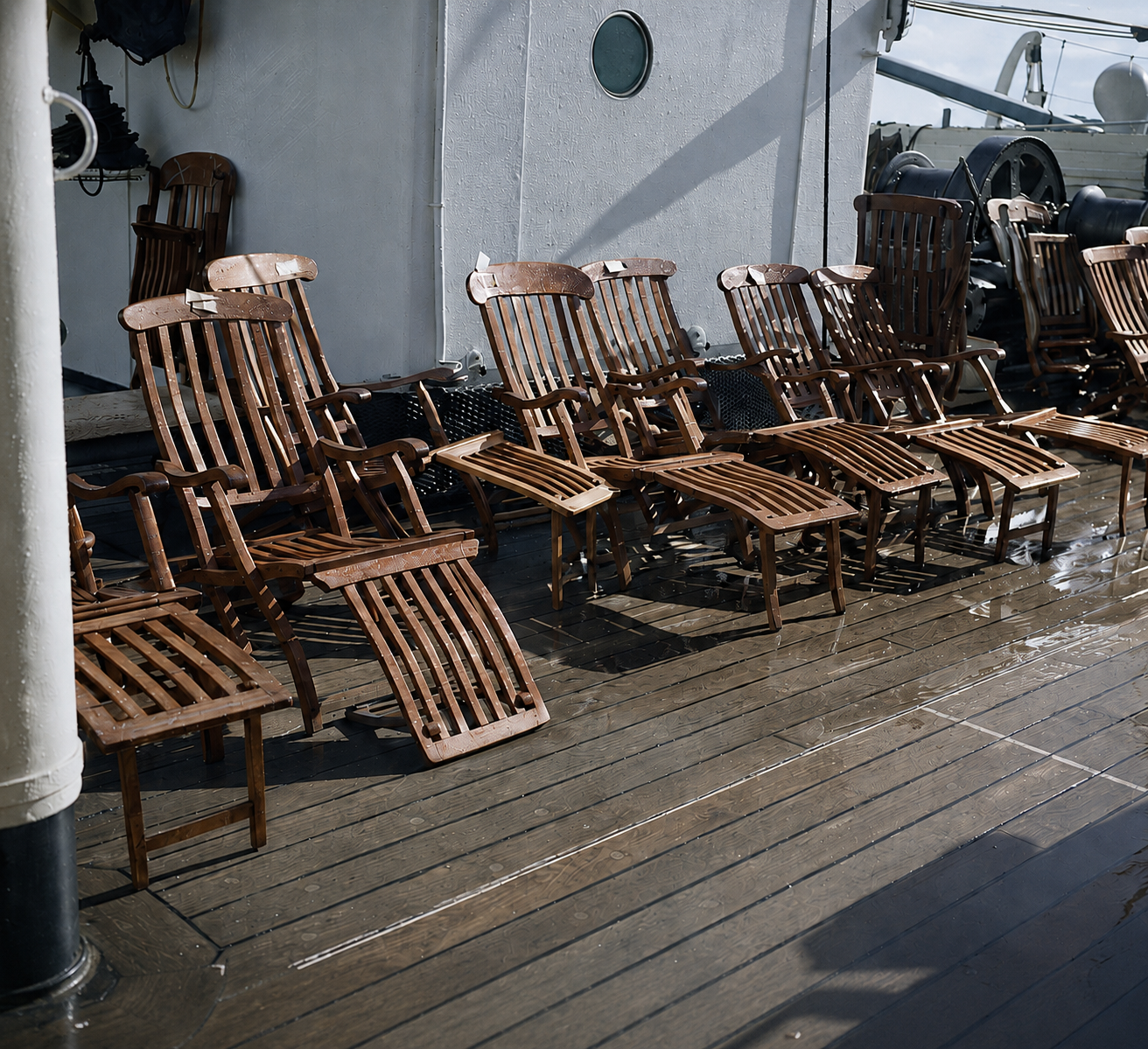
Rows of empty wooden and canvas steamer chairs on the promenade deck of the liner Athenia, photographed in 1937.
Empty deck chairs aboard Athenia, photographed in 1937. Colourised from original Library of Congress photograph. Photograph: Paul Vanderbilt. Library of Congress Prints & Photographs, LC-DIG-fsa-8d37009, 1937. No known restrictions.

The First Lord of the Admiralty has told the Commons that 1,418 people were aboard the Athenia, of whom 315 were crew and 1,103 were passengers. About 125 are unaccounted for.

Some 800 held British or European passports and more than 300 held passports of the United States.

Mr Churchill said statements have been taken on oath from the chief officer and from numerous British and American survivors, and that it is now established that the ship was attacked without warning by a submarine. He did not say whose.

He put the position at 250 miles north-west of the coast of Ireland. On Monday he told the House it was about 200 miles.

He said the disaster may prove to be greater than earlier reports indicated.

Wire

German minister leaves Baghdad after Iraq breaks relations

Allied Press Service

The German minister to Iraq, Dr Fritz Grobba, has left the country with his staff.

The departure follows the Iraqi Government's decision to sever diplomatic relations with Germany. Iraq is bound to Britain by treaty.

Iraq has not declared war on Germany. Breaking relations and entering the war are separate acts, and only the first has taken place.

Correspondent

Berlin says Kraków has fallen, and no one outside can confirm it

The Stockholm Observer

Berlin says it holds Kraków. The claim is not like most claims out of this war, and the difference is worth a moment.

Take Monday's air attack on the German fleet, which this office wrote about yesterday. London said it had done severe damage, Berlin said it had done none, and neither account could ever be settled from outside, because the ships sit in a German anchorage and Germany will not photograph them for anybody. That dispute is permanent.

A city is not a ship. Kraków has a population, a railway station, a post office and consuls. Whatever Berlin says today, in a fortnight there will be travellers and letters and neutral businessmen who have been there.

Wire

French communiqué reports local advances

Allied Press Service

The French communiqué issued this morning reports local advances on the frontier.

It names no sector, no formation, and no objective. It gives no figure for ground gained and no casualties.

Accounts reaching correspondents in Paris go considerably further, placing French troops beyond the German frontier and describing air forces working with them against the fortified zone. Those accounts are not in the communiqué.

The Ministry of War has not commented on them.

Situation map

Western Poland: three positions, three kinds of claim

Western Poland at midday on the sixth day. Nothing on this map has been independently confirmed. Map: LIVE WW2.
Wire

Berlin announces the capture of Kraków

Allied Press Service

Germany has announced that its forces have taken Kraków.

No independent account of the city has reached this office.

Kraków is one of Poland's principal cities and lies well to the south of the fighting reported around Warsaw this morning.

Correspondent

Refusing neutrality and declaring war are not the same act

The Southern Cross

Yesterday this office reported that the Union had voted down neutrality on Monday and was not at war. Today it is at war. Both statements were true when written, and the two days between them are worth setting out, because no other Dominion has taken this route.

Australia was at war in a sentence from its Prime Minister on Sunday. New Zealand dated its declaration to the minute Britain's began. India was declared at war by the Viceroy, and nobody asked an elected Indian.

Here it took a division lost 80 to 67, a request for a dissolution, a refusal, a resignation, and a new Prime Minister. Then a gazette.

Wire

South Africa proclaims a state of war with Germany

Allied Press Service

A proclamation published today in a Government Gazette Extraordinary places the Union of South Africa in a state of war with the German Reich.

The gazette is numbered 2676. The proclamation states that peaceful relations with Germany are severed and that the Union is at war with effect from today.

Yesterday the Union had voted down neutrality and was not at war. General Smuts took office as Prime Minister and the position has now been settled by document.

The proclamation says nothing about what forces will be raised, or where they will go.

Correspondent

Little about the German approach to Warsaw can be established

The Stockholm Observer

Three things are being reported from Warsaw this morning and they are not equally solid. It is worth separating them before the day's wires arrive and mix them further.

The first is that the capital is preparing to be defended. That can be relied on. Polish radio has asked the population to bring spades. A government does not make that appeal about a city it expects to hold comfortably, and it does not make it privately.

The second is where the German forces are. Berlin says one thing and Warsaw says another, and both are belligerents describing a front neither will let anyone else look at. This office can say they are reported advancing. It cannot say from where or how near.

Eyewitness

The morning the sirens went, and nobody knew what they meant

The London Sentinel

The siren on the Fulham Road started at about twenty to seven and a woman two doors down came out in a dressing gown with a kettle still in her hand.

Most people went to the shelters. Some did not. A man in a doorway finished his cigarette first and said he would see how it went.

Then the whistles started, and that is where it came apart. Wardens use whistles for the warning. Wardens also use whistles for the all-clear. On this street they were taken for the all-clear and people came back up, and forty yards along, at the corner, people were still going down.

Wire

Warsaw digs in; citizens called out with spades

Allied Press Service

Polish radio has appealed to the people of Warsaw to report with spades and help dig defensive works.

The capital is preparing to be fought over. Reports from here this morning describe plans to hold a line beyond the city limits rather than at them.

Civilians are moving east. So are government departments and the diplomatic missions, though accounts of where they have gone do not agree and cannot be reconciled from here.

German forces are reported advancing on the capital from more than one direction. Their positions are not established.

BreakingWire

Sirens over London; anti-aircraft guns in action

Allied Press Service

Air-raid sirens sounded across London at 06:42 this morning after aircraft were reported approaching the east coast.

Anti-aircraft batteries have been heard firing. Civil-defence measures were put into effect across London, the Thames estuary and the south-east.

No statement has been issued. No damage has been reported.

The warning was still in force when this was filed.

Wire

Westerplatte: no surrender reported on the sixth day

Allied Press Service

No surrender has been reported at Westerplatte.

Six days after the shelling of the transit depot in Danzig harbour began, neither Berlin nor Warsaw has announced that the position has fallen. Germany has continued to describe it as under attack.

That is the whole of what can be said from here. No account of the garrison's condition, its numbers or its casualties has reached this office from anyone who has seen it.

The absence of a German claim is not evidence that the garrison is holding. It is the only thing on the record.

Wire

Roosevelt signs the arms embargo

Allied Press Service

President Roosevelt has signed the proclamation prohibiting the export of arms, ammunition and implements of war to the belligerents. It was issued here tonight.

The general proclamation of neutrality, signed shortly after one o'clock this afternoon, did not touch the export of arms. This is the second instrument, and it is the one that makes the sale unlawful.

It names France, Germany, Poland, and the United Kingdom, India, Australia and New Zealand.

Those are the countries the United States now recognises as at war. South Africa is not among them. Neither is Canada.

The day in pictures

Rows of empty wooden and canvas steamer chairs on the promenade deck of the liner Athenia, photographed in 1937.
Empty deck chairs aboard Athenia, photographed in 1937. Colourised from original Library of Congress photograph.Photograph: Paul Vanderbilt. Library of Congress Prints & Photographs, LC-DIG-fsa-8d37009, 1937. No known restrictions.
Western Poland at midday on the sixth day. Nothing on this map has been independently confirmed.Map: LIVE WW2.
The white marble Federal Reserve Board Building in Washington, photographed from across an open space in about 1937.
The Federal Reserve Board Building, Washington, photographed in about 1937. Colourised from original Library of Congress photograph.Photograph: Harris & Ewing. Library of Congress Prints & Photographs, LC-DIG-hec-23266, c. 1937. No known restrictions.

Where things stood at the start of the day

Poland
The Polish Post Office in Danzig has fallen, on the sole account of a correspondent who entered the city with German permission. Westerplatte is still holding after five days, and Warsaw's general staff has acknowledged abandoning Grudziądz, Bydgoszcz and Częstochowa.
The Atlantic
Survivors of the Athenia came ashore at Greenock, with two estimates of the number missing circulating about 200 apart and no authoritative death toll given. Three merchant ships have been lost elsewhere: the Olinda, the Carl Fritzen and Bosnia, with one man dead.
Britain at home
Berlin and London have given accounts of Monday's attack on the German fleet, and they agree on almost nothing. The Ministry of Information claims severe damage and gives no loss figure; Berlin says the ships were barely harmed and five British bombers came down.
Western Front
Two Bills received the Royal Assent in a single day: national registration with identity documents, and a prohibition on trade with the enemy. The French evening communiqué named no sector and gave no result, though French forces have been in action on the frontier.
The Empire
Hertzog has resigned in Cape Town and Smuts has been asked to form a government; the Union has refused neutrality but is not at war. Australia has ordered a militia call-up in successive drafts of 10,000, and Canada's parliament meets on Thursday.
Neutrals
Roosevelt has signed the proclamation of American neutrality, which does not impose the arms embargo and names neither South Africa nor Canada among the belligerents. Ireland is neutral, Italy is not a belligerent, and Japan says it will stay out of the European war.
Background

The law that took the decision out of the President's hands

The embargo signed in Washington last night was not a policy choice. Under the Neutrality Act, once the President finds that a state of war exists, the prohibition follows automatically.

That is why two instruments were needed rather than one. The general proclamation of neutrality states the position of the United States. The second proclamation is the operative one: it makes the export of arms, ammunition and implements of war to the named belligerents unlawful.

The list of names is the part worth reading. France, Germany, Poland, and the United Kingdom, India, Australia and New Zealand. Those are the countries the United States now recognises as at war, and the prohibition reaches exactly as far as that list does and no further.