Skip to the day
LiveWW2The Second World War, in real time
Day 10
Sunday 10 September 1939
From the LIVE WW2 feed

The day in dispatches

Filed through the day, as it happened
Newest first
Summary

What we know at the close of the tenth day

Allied Press Service

Canada is at war with Germany. The proclamation reached the Department of External Affairs in Ottawa early this afternoon, seven days after Britain's declaration. Washington applied its neutrality law and its arms embargo to Canada the same evening.

Berlin has changed its account of Warsaw. Yesterday it said its troops had reached the city centre; today it says they withdrew to the outskirts. Warsaw radio is still broadcasting and says the defenders are giving ground slowly. Lwow has been told by radio to prepare for a siege.

France reports advances between the Saar and the Vosges. German wireless acknowledges French armoured cars on German soil and claims casualties and prisoners. How much ground has changed hands is disputed.

Moscow has named five military districts in its call-up of reserves and has not said where the men are going.

Two more British merchant ships are reported lost, the crews rescued.

Still open tonight: the position around Warsaw, where the Polish Government is, the depth of the French advance, Soviet intentions, the merchant ships still held under contraband control at Gibraltar, and who sank the Athenia.
Editorial

Ten days in, governments are rebuilding themselves around the war

The Imperial Review

Warsaw is the story everyone is watching and nobody can settle. Berlin said yesterday that its troops had reached the centre of the city. Today Berlin says they came out again. Warsaw radio is still broadcasting and says the defenders are giving ground slowly. That is where the fighting stands, and it is not much to go on.

Look away from the capital and the day is a great deal clearer.

Canada declared war this afternoon, seven days after Britain, by its own vote and its own proclamation. Within hours Washington applied American neutrality law to Canada and embargoed the sale of American arms to it. Paris prohibited the export of capital and took control of dealings in gold and foreign exchange. Moscow called reserves in five military districts and would not say where they are going. In Canberra the leader of the Opposition set out the limits of the manpower his party will support. In Buenos Aires a neutral government stopped a German airline from flying.

Wire

Roosevelt extends US neutrality and the arms embargo to Canada

The New York Register

President Roosevelt has issued two proclamations applying American neutrality law to the war between Germany and Canada.

Proclamation 2359 extends the existing neutrality provisions. Proclamation 2360 extends the embargo on exports of arms, ammunition and implements of war, which means American arms cannot be sold to Canada any more than to Germany.

Canada declared war this afternoon.

Correspondent

Canada took seven days and a vote

The Southern Cross

Britain declared war on 3 September. Canada declared war this afternoon. The week between the two is the whole point, and Ottawa has been fairly open about wanting it noticed.

Since 1931 a Dominion's declaration has been its own act rather than a consequence of Britain's. Canada has now used that machinery in full: Parliament recalled, the war debate held, the Address adopted late on Saturday night, the King's approval obtained, the proclamation made by the Governor General and published in a special edition of the Gazette. The edition was printed to carry one document.

The Commonwealth has produced four answers to the same question in eight days. Australia and New Zealand treated Britain's declaration as covering them and said so within hours. South Africa's parliament divided over it and changed its government. Canada waited and voted.

Communiqué

The proclamation: a state of war exists

The Southern Cross
The proclamation declaring a state of war with the German Reich, with the Great Seal of Canada. Published in a special Extra edition of the Canada Gazette, Ottawa, 10 September 1939. Library and Archives Canada / MIKAN 192656

This is the proclamation published in the special edition of the Canada Gazette this afternoon. It was made by the Governor General, Lord Tweedsmuir, with the approval of the King. It is the document that puts Canada at war.

Official textGovernor General of Canada

Proclamation, Canada Gazette Extra, Volume LXXIII, No. 12, 10 September 1939

TWEEDSMUIR
CANADA
GEORGE THE SIXTH, by the Grace of God of Great Britain, Ireland, and the British Dominions beyond the Seas KING, Defender of the Faith, Emperor of India.
To All To Whom these Presents shall come or whom the same may in anywise concern, Greeting;
A PROCLAMATION
ERNEST LAPOINTE, Attorney General, Canada.
WHEREAS by and with the advice and consent of Our Privy Council for Canada We have signified Our Approval of the issue of a Proclamation in the Canada Gazette declaring that a State of War with the German Reich exists and has existed in Our Dominion of Canada as and from the tenth day of September, 1939;
Now Therefore We do hereby Declare and Proclaim that a State of War with the German Reich exists and has existed in Our Dominion of Canada as and from the tenth day of September, 1939.
Of All Which Our Loving Subjects and all others whom these Presents may concern are hereby required to take notice and to govern themselves accordingly.
In Testimony Whereof We have caused these Our Letters to be made Patent and the Great Seal of Canada to be hereunto affixed. Witness: Our Right Trusty and Well-beloved John, Baron Tweedsmuir of Elsfield, [styles omitted] Governor General and Commander-in-Chief of Our Dominion of Canada.
At Our Government House, in Our City of Ottawa, this tenth day of September, in the year of Our Lord one thousand nine hundred and thirty-nine and in the Third year of Our Reign.
By Command, W.L. MACKENZIE KING, Prime Minister of Canada.

Canada Gazette, Volume LXXIII, No. 12, Extra, 10 September 1939. Reproduced verbatim with one marked elision: Lord Tweedsmuir's honorific styles in the testimony clause are cut as [styles omitted]. Nothing operative is removed.

BreakingWire

Canada declares war on Germany

The Southern Cross

Canada is at war with Germany.

A special edition of the Canada Gazette carrying the proclamation reached the Department of External Affairs early this afternoon. That delivery was the point officials had arranged in advance as the moment the country would be formally at war.

The proclamation was made by the Governor General with the King's approval. Britain declared war seven days ago. The Canadian House approved the Address supporting participation at 22:25 last night.

Wire

Argentina cancels trial flights by a German-owned airline

The Stockholm Observer

Argentina has cancelled permits for trial flights planned by a German-owned South American airline.

The government says the concern is that airmen could locate British warships and report their positions. It has not said that any such flight has taken place.

Argentina is neutral.

Correspondent

No account of Warsaw can be checked from here

The Stockholm Observer

Yesterday Berlin said German troops had reached the centre of Warsaw. Today Berlin says those troops withdrew to the outskirts to wait for the main army. Nobody in Berlin has explained the difference between the two statements, and nobody has been asked to in public.

Warsaw radio has gone on broadcasting through both. It says the defenders are giving ground slowly and that the Germans have made no important gains. It gives no positions either.

The third account is the one that reached this city yesterday, when the Swedish Legation told Stockholm that Warsaw was not occupied. The Legation is inside the city. That makes it the closest of the three to the thing being described, and it still only says what Warsaw is not.

Wire

Refugee council to support German refugees among the Athenia survivors

The London Sentinel

The Scottish National Council for Refugees says it will give financial help to refugees from Germany who were aboard the Athenia.

The Glasgow German-Jewish Aid Committee is to look after them until sailings to Canada and the United States can resume. They were crossing the Atlantic when the ship was sunk.

Responsibility for the sinking is still disputed.

Wire

110 advice centres open across London

The London Sentinel

110 citizens' advice centres have opened across London. They deal with separation allowances, rent, and hire-purchase agreements.

British Official Wireless says the scheme is meant to go beyond the capital. No figure has been given for how many centres are planned elsewhere, or when.

Britain has been at war for a week.

Wire

Jewish Agency and Arab Higher Committee set out separate terms of support

The Imperial Review

Moshe Shertok says the Jewish Agency's offer of assistance to Britain is not necessarily confined to Palestine, and indicates that Jewish volunteers could serve with British forces elsewhere.

Separately, the Arab Higher Committee, which remains outlawed, announces support for Britain in the European conflict within Arab regions only.

Both statements appear in today's Jewish Telegraphic Agency bulletin. They were issued separately and the two bodies are not acting together.

Shertok also proposes an "armistice" over the parts of the White Paper left unenforced.

Communiqué

TASS names five military districts in the partial call-up

The Stockholm Observer

TASS, the Soviet state agency, published this communiqué in the Soviet press today. It names the five military districts in which reservists are being called: Ukraine, White Russia, Moscow, Kalinin and Orel. It gives Moscow's reason. It does not say where the men are going, or how many.

Official textTASS
State media

TASS is the Soviet state agency. This is the government's own account of its own mobilisation.

Tass communiqué, published in the Soviet press, 10 September 1939

Published under the title "The Partial Calling up of Reserves to the Red Army":
"In connection with the German-Polish war which is assuming an increasingly extensive and threatening character, the Government in the interest of the further strengthening of the defense of the country has decided on partial calling up to the army of certain classes. The summoning of reserves to the Red Army has been carried out in the Ukraine, White Russia, Moscow, Kalinin and Orlov [Orel] military districts."

Full translation as transmitted by the United States Embassy in Moscow, telegram 525, 10 September 1939. Foreign Relations of the United States, The Soviet Union 1933-1939, document 592, file 861.20/482. The bracketed gloss on Orlov is the published translation's own.

Wire

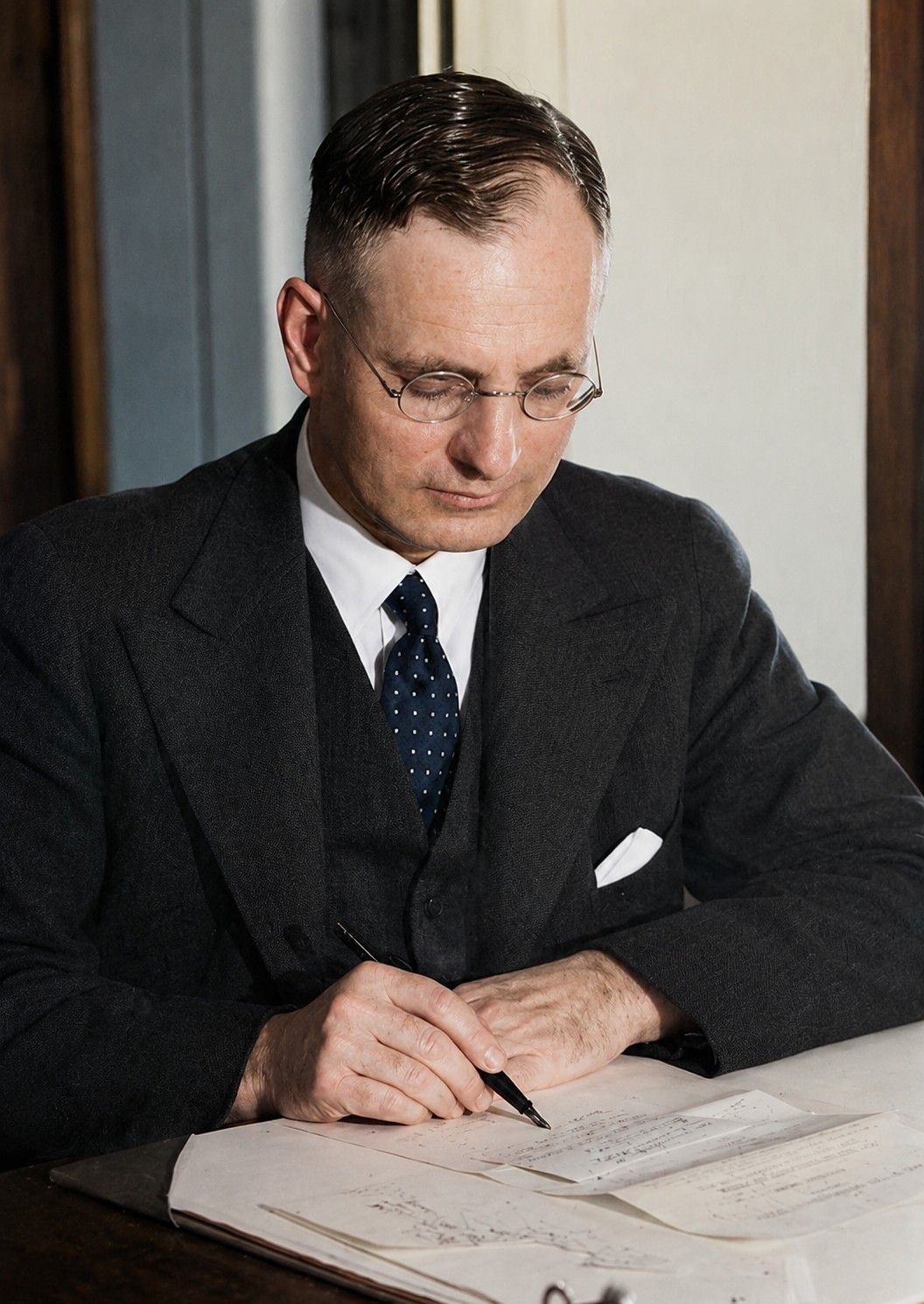
Curtin says Labor will not support conscription for overseas service

The Southern Cross
A man in a dark three-piece suit and rimless spectacles sits at a desk, head bowed, writing with a pen on loose sheets of handwritten paper. Light falls from a window to his left onto a panelled wall behind him.
John Curtin, Leader of the Opposition. Portrait, 1938. Colourised from original National Library of Australia photograph. National Library of Australia, PIC/6450

John Curtin, the leader of the Opposition, says Federal Labor will not support conscription for service overseas, and will not agree to Australia sending a military force abroad under the policy now proposed.

He says Australian manpower is needed first for Australia's own security.

Curtin spoke in a broadcast from Canberra this evening. This is the Opposition's position and not the government's.

Wire

Ministry of Information reports Winkleigh and Goodwood lost, crews rescued

The Atlantic Ledger

The Ministry of Information says the British steamers Winkleigh and Goodwood have been sunk and that all crew members were rescued. Several men aboard the Goodwood were injured.

No independent account of the cause has been given, and the announcement gives no position for either sinking. The Ministry says both ships were torpedoed.

Wire

French communiqué reports advances between the Saar and the Vosges

The Paris Dispatch

A French communiqué says a series of "methodic actions" has produced advances between the Saar and the Vosges. It does not name the ground taken.

German wireless separately acknowledges that French armoured cars have crossed onto German territory, and claims French casualties and prisoners.

Both sides now say French troops are on German soil. Everything beyond that is disputed, including the French claim yesterday that almost all the Warndt Forest was in French hands. Today's communiqué does not repeat it.

Correspondent

France puts capital, gold and foreign exchange under state control

The Paris Dispatch

The Republic has published decrees prohibiting the export of capital and placing dealings in gold and foreign exchange under state control. They are dated yesterday and appear in the Journal Officiel this morning.

France did this in the last war too, though not in the first week of it.

The decrees regulate what may leave the country and licence what may be traded. They do not say for how long. Nothing in them is framed as temporary, and nothing in them is framed as permanent either.

Whether the measures will hold the franc is not a question anyone here will answer in September. What they do tell you is what the government expects of the months ahead: a state that intends to fight briefly does not take control of its gold on the eighth day.

Wire

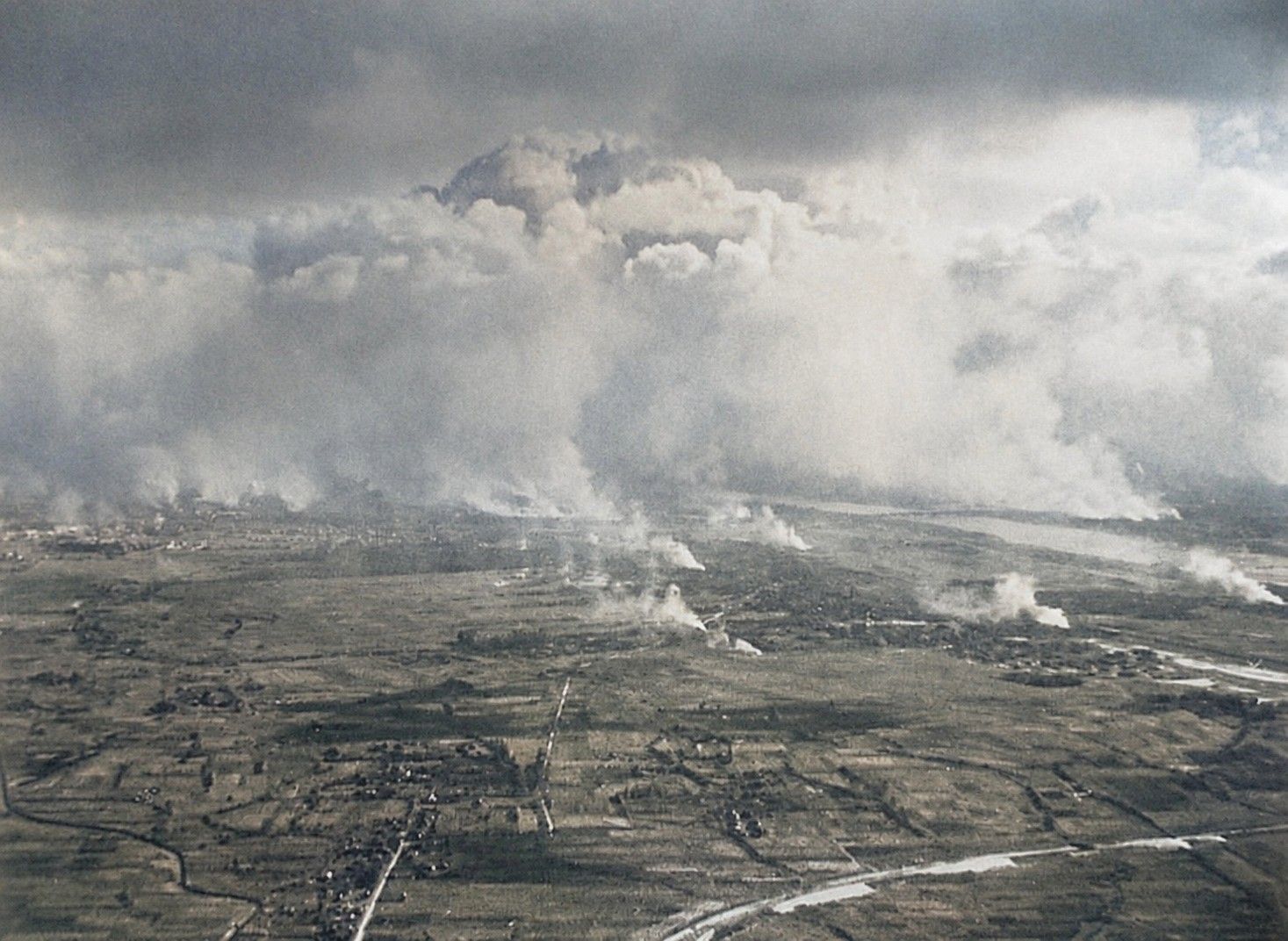
Berlin says its troops pulled back from central Warsaw to the outskirts

Allied Press Service
An oblique aerial photograph looking across open farmland toward a horizon obscured by a broad wall of smoke. Field strips, hedgerows and a winding river cross the foreground, with scattered village buildings along a road. Several separate columns of pale smoke rise from the middle distance and merge into a single dark bank of cloud across the upper half of the frame.
Fires burning in Warsaw, photographed from the air. German Federal Archives, dated to September 1939; the exact day is not recorded. Colourised from original Bundesarchiv photograph. Bundesarchiv, Bild 183-S56603 / CC BY-SA 3.0 DE

A German government spokesman says the motorised troops that reached central Warsaw yesterday withdrew to the outskirts to wait for the main army.

Berlin's account yesterday was that the city had been reached. Its account today is that the troops came out again.

Warsaw radio has continued broadcasting throughout. The Swedish Legation in the city reported yesterday that Warsaw was not occupied.

Wire

Lwow told by radio to prepare for a siege

Allied Press Service

Polish radio has told the people of Lwow to prepare to resist a siege on the scale of Warsaw's.

The broadcasts carry repeated air-raid alarms and practical instructions, among them that children should be identified by name.

Polish radio says German forces are pressing towards the city's communications, without saying how far away they are or in what strength. Lwów lies more than 200 miles east of Warsaw.

Correspondent

Nehru's message, written on his return from China, reaches print

The Far Eastern Courier

Jawaharlal Nehru's message to his colleagues in the United Provinces appears this morning in the National Herald. He wrote it here yesterday, having come back from China in the first week of the war.

The message tells Congress to end its petty bickerings and face the crisis together. It ties the emergency to the demand for a free India, which is the demand Nehru left with and the one he has returned to.

He went to China to see a war that has been running since 1937. He came back into a different one, and the message reads as though he is still deciding how the two connect.

Wire

Abe says Japan is not intervening in the European war

The Far Eastern Courier

Prime Minister Nobuyuki Abe says Japan is not intervening in the European war.

He says Japan's relations with the Soviet Union, the United States, Britain and France may be readjusted. He does not say what that would involve. He also rejects the idea that the war in Europe gives Japan an easier settlement in China.

This is the Abe government's stated policy.

Wire

Canadian Commons adopts the Address at 22:25 Ottawa time

The Southern Cross

The Canadian House of Commons has approved the Address supporting Canada's participation in the war. The vote came at 22:25 last night in Ottawa, 02:25 GMT.

Canada is not at war until a proclamation follows, and the government has not said when it will be issued. The Address is the parliamentary stage; the proclamation is the legal one.

Wire

Warsaw radio still broadcasting, says defenders are giving ground slowly

Allied Press Service

Warsaw radio was still transmitting overnight. In broadcasts monitored during the night the station says the city's defenders are giving ground slowly and that German forces have made no important gains.

It gives no positions. This is the Polish account and it cannot be checked from outside the city.

Berlin said yesterday that its troops had reached central Warsaw.

The day in pictures

An oblique aerial photograph looking across open farmland toward a horizon obscured by a broad wall of smoke. Field strips, hedgerows and a winding river cross the foreground, with scattered village buildings along a road. Several separate columns of pale smoke rise from the middle distance and merge into a single dark bank of cloud across the upper half of the frame.
Fires burning in Warsaw, photographed from the air. German Federal Archives, dated to September 1939; the exact day is not recorded. Colourised from original Bundesarchiv photograph.Bundesarchiv, Bild 183-S56603 / CC BY-SA 3.0 DE
A man in a dark three-piece suit and rimless spectacles sits at a desk, head bowed, writing with a pen on loose sheets of handwritten paper. Light falls from a window to his left onto a panelled wall behind him.
John Curtin, Leader of the Opposition. Portrait, 1938. Colourised from original National Library of Australia photograph.National Library of Australia, PIC/6450
The proclamation declaring a state of war with the German Reich, with the Great Seal of Canada. Published in a special Extra edition of the Canada Gazette, Ottawa, 10 September 1939.Library and Archives Canada / MIKAN 192656

Where things stood at the start of the day

Poland
Warsaw is still contested: Berlin says its troops entered the capital on Friday, Warsaw says that is false, and the Swedish Legation has told Stockholm the capital is not occupied. Warsaw's stations are still transmitting, and the Polish Government is reported moving east.
The Atlantic
Thirty of the 97 British merchant ships sheltering at Gibraltar have sailed under destroyer escort, and 67 remain. A list compiled in Montreal names 171 Athenia passengers unaccounted for, built from cables and incomplete survivor lists and not presented as a death toll.
Britain at home
The Government has told departments to plan for a war lasting at least three years: a planning assumption rather than a forecast, but one that rules out organising for a short war. A Polish military mission has reached London.
Western Front
The French High Command says the Warndt Forest, on German soil west of Forbach, is almost entirely in French hands, giving no line, dates or casualties. Air-raid alarms sounded twice over Berlin, the capital's first of the war, and no aircraft were seen.
The Empire
Canada has not declared war. Mackenzie King has told members that adopting the Address in Reply will be treated as authority to seek a proclamation of war, so the vote on the Address is the vote.
Neutrals
TASS says Soviet reserve classes are being called up because the German-Polish war is taking on a wide and menacing character, giving no numbers, classes or destinations. The largest neighbour of eastern Poland is mobilising reserves, and has chosen to say so in public.
Background

Seven days between Britain's war and Canada's

Britain declared war on 3 September. Canada declared war today. The gap is not hesitation: it is the machinery of a Dominion that decides for itself.

Since the Statute of Westminster of 1931, a Dominion is not carried into war by a British declaration. It has to declare for itself, and Canada has spent the week doing exactly that.

The sequence ran: Parliament recalled, the war debate held, the Address in Reply adopted late on Saturday night, the King's approval obtained, the proclamation issued by the Governor General, and publication in a special Extra edition of the Canada Gazette. The edition was printed to carry one document.