Skip to the day
LiveWW2The Second World War, in real time
Day 11
Monday 11 September 1939
From the LIVE WW2 feed

The day in dispatches

Filed through the day, as it happened
Newest first
Summary

What we know at the close of the eleventh day

Allied Press Service

Canada asked Parliament for up to $100 million and told the House that militia activity could involve at least 40,000 men. No decision has been announced on sending an army abroad.

France issued two communiques. The morning one reported a local advance in darkness between the Little Saar and the Vosges. The evening one claimed gains on a front of about twelve miles east of the Saar. Neither gives a depth.

Three broadcasts described the fighting around Warsaw and none agree. Warsaw radio says the defence lines hold. Lwow radio says Germans have been pushed back from suburbs. The German High Command says the battle west of the Vistula is nearing its decision.

Three British merchant ships were attacked in the Atlantic. Firby was sunk at 14:40 GMT. The commander of the submarine that sank her signalled the Admiralty at 17:25 GMT asking that her crew be saved.

Turkey told its Assembly it is outside the present war. Moscow newspapers said the reserve call-up is a precaution against retreating Polish troops.

In India, federation work is held in suspense. The Congress Working Committee met at Wardha and issued nothing.

Freight rates out of Australia rose 25 per cent this morning, and the shipping association cancelled its forward bookings with them.
Editorial

The clearest news today comes from treasuries and shipping offices

The Atlantic Ledger

Nothing published today establishes where a single army unit stands in Poland.

Three broadcasts described the fighting around Warsaw and contradicted each other. Two French communiques claimed ground east of the Saar and gave no depth for it. The German High Command said a battle is nearing its decision, named no formation and gave no prisoner figure. A reader who wants to know how the war is going on the ground ends today knowing what he knew on Sunday.

The rest of the day was legible.

Canada asked its Parliament for $100 million and put a militia figure at 40,000. Australia told its Parliament it is planning for a long war and has consulted the states about finance and manpower. India's constitutional development stopped. Turkey defined its distance from the fighting in a chamber, on the record. The Overseas Shipping Representatives' Association raised freight rates a quarter and canceled its forward bookings.

Correspondent

Three radio accounts of Warsaw disagree, and none came from inside the city

Allied Press Service
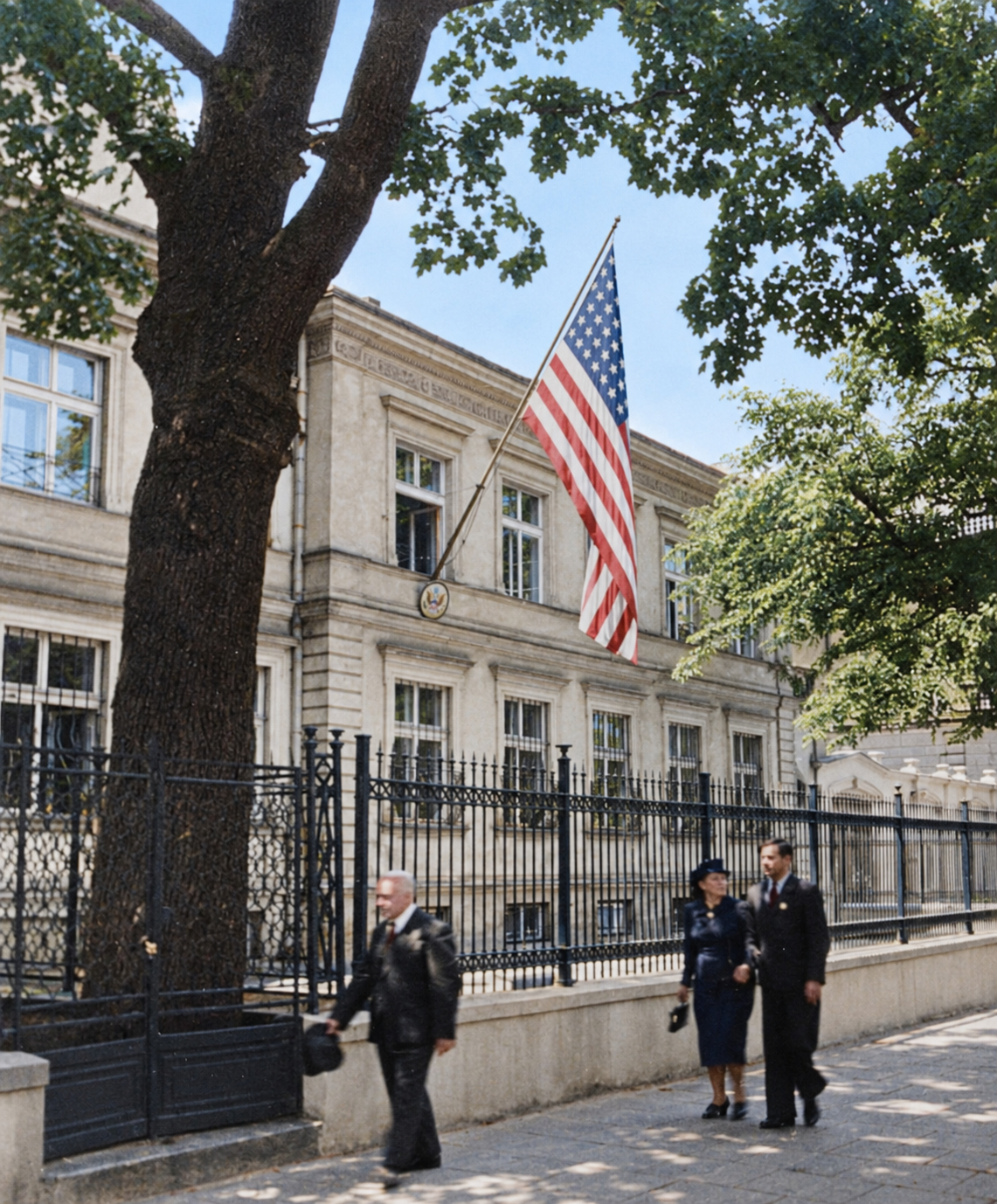
Street view of the US Embassy chancery in Warsaw behind railings, with an American flag above the pavement and civilians nearby.
The United States Embassy chancery, Warsaw. Colourised from original Library of Congress photograph. Harris & Ewing / Library of Congress, LC-DIG-hec-27203

Three transmitters described the fighting around Warsaw today and none of the accounts can be reconciled.

Warsaw radio said at midday that the city's defence lines are holding, and reported German bombs falling in the centre. Two hours later Lwow radio said Polish troops had forced German forces back from some Warsaw suburbs. German broadcasts at about the same time said encircled Polish forces are close to the end.

What can be established from outside Poland is short. Warsaw radio is transmitting. Bombs are falling on the city. Berlin claimed the centre on Saturday, withdrew the claim on Sunday, and has not renewed it today.

Correspondent

Three ships lost in a day, and Sydney raises freight rates 25 per cent

The Atlantic Ledger

Freight rates out of Australia went up 25 per cent this morning. Three British merchant ships have been attacked in the Atlantic since.

The Sydney increase came first, which matters. The Overseas Shipping Representatives' Association was not responding to today's losses. It could not have been.

What the association priced is the risk that produced them. Forward quotation bookings are canceled and existing freight contracts are canceled with them, which tells you the association does not believe it can quote a rate that will hold.

A ship lost is a hull, a cargo and a crew. It is also an insurance claim, a broken schedule and a berth that stays empty at the other end.

Correspondent

Canada's war now has a price and a headcount

The Imperial Review

Canada's war acquired a price and a headcount this afternoon, and still has no army attached to it.

Yesterday the contribution was open in every direction. Today the House has been asked for up to $100 million, told that militia activity could involve at least 40,000 men for general purposes, and told that money is contemplated for training aircrew and sending them overseas. Mackenzie King has promised legislation for a ministry of munitions and supply.

Read together that is money, a home establishment, an air commitment and an industrial department.

The 40,000 covers general purposes. It is not a force earmarked for anywhere.

Graphic

What Canada has asked its Parliament for

Two figures with opposite meanings, and a third commitment with no figure at all.

What Canada has asked its Parliament for: authority to spend up to $100 million on the war, militia activity involving at least 40,000 men, and a ministry of munitions and supply. Compiled from the parliamentary record. Graphic: LIVE WW2

Compiled from the Canadian parliamentary record, 11 September 1939

Wire

Ottawa asks for $100 million and at least forty thousand men

The Imperial Review
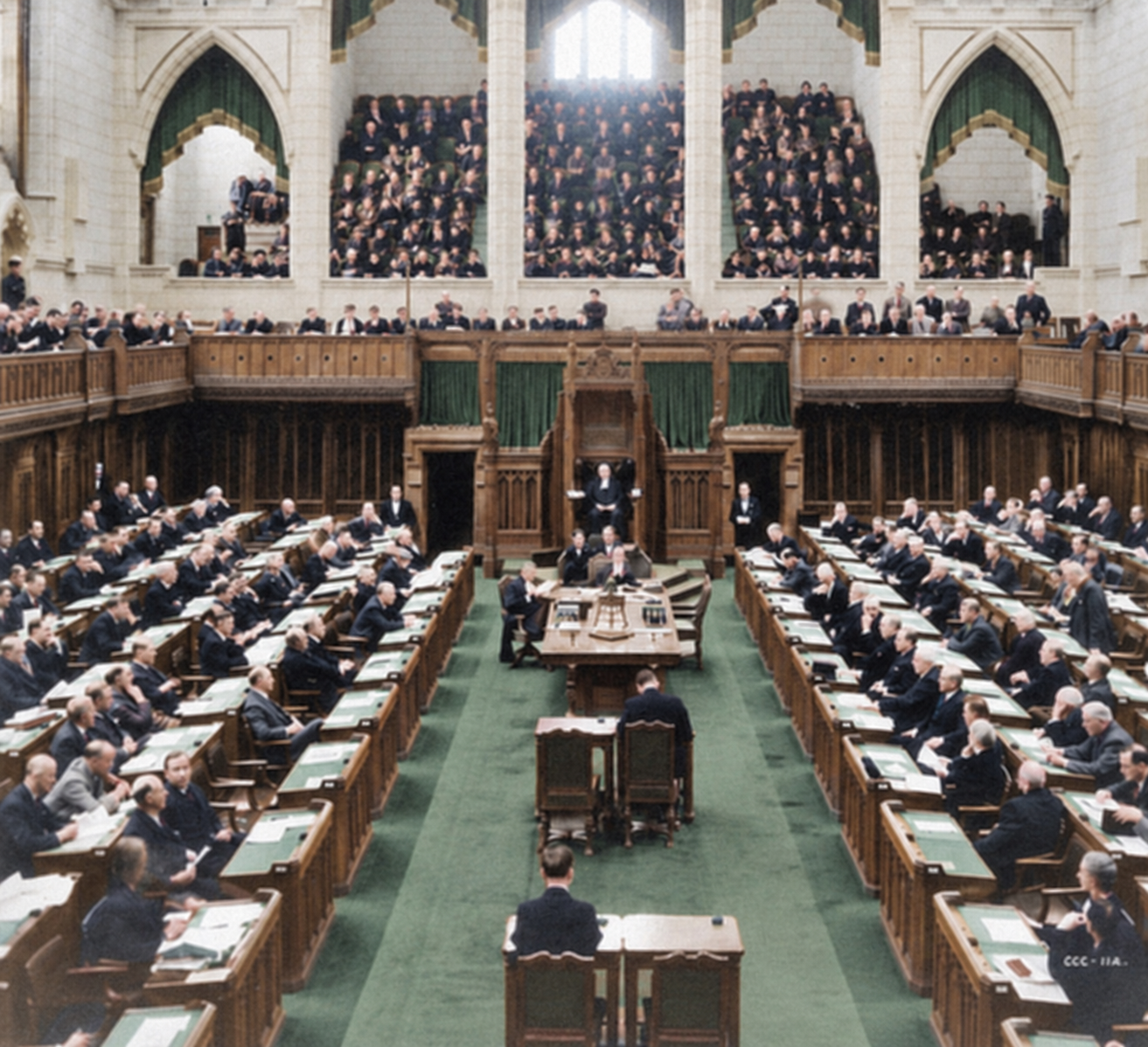
Wide view of Canada's House of Commons chamber, with members seated at desks on both sides and spectators in the galleries.
Members of the House of Commons in session, Ottawa. Colourised from original Library and Archives Canada photograph. CGMPB / Library and Archives Canada / C-024358

The Canadian government has asked Parliament for authority to spend up to $100 million on the war, including operations in Canada and beyond it.

J. L. Ilsley, the acting finance minister, told the House that militia activity could involve at least 40,000 men for general purposes, with further special and coast defence personnel on top. Expenditure is also contemplated for training pilots and airmen and sending them overseas.

Neither minister said whether Canada will send an army abroad.

Mackenzie King said legislation will be brought forward for a ministry of munitions and supply.

Wire

The U-boat that sank Firby has signalled the Admiralty asking that her crew be saved

The Atlantic Ledger

The Admiralty received a wireless message at 17:25 GMT this evening from the commander of the submarine that sank the Firby, asking that her crew be saved.

The Admiralty has not said whether the crew has been picked up.

The message gave their position.

Wire

Evening communique claims gains on a twelve-mile front east of the Saar

The Paris Dispatch

The French evening communique claims further gains on a front of about twelve miles east of the Saar.

That is a wider claim than this morning's, which reported a local advance between the Little Saar and the Vosges and gave no frontage at all.

Neither communique gives a depth. No units are named. Nothing has been independently confirmed.

Reports reaching Paris tonight also say German counterattacks earlier in the day were repulsed.

Wire

Three British merchantmen attacked in the Atlantic

The Atlantic Ledger

Three British merchant ships were attacked in the Atlantic today: Blairlogie, Firby and Inverliffey.

Firby's crew abandoned ship and she was sunk at 14:40 GMT.

The Admiralty has not given a full accounting for any of the three. Blairlogie's crew was picked up earlier today by an American liner.

Wire

Polish officials' train took five days and was bombed repeatedly, passengers say

The Stockholm Observer

A train carrying Polish government officials has reached south-eastern Poland. People travelling on it told reporters the train was bombed repeatedly during a journey that took five days.

The report does not name any of them. It does not say where the train started, which line it took, or how many people were aboard, and no other account of the journey has reached this office.

In ordinary conditions that journey does not take five days.

The report is datelined London, yesterday.

Wire

Saydam tells the Assembly Turkey is outside the present war

The Stockholm Observer

Refik Saydam has told the Grand National Assembly that Turkey is outside the present war. “Biz bu gunku harbin haricindeyiz,” he said: we are outside the war of today.

The Prime Minister described the military measures taken in parts of the country as precautionary and nothing more, and said relations with the belligerent states remain normal.

Negotiations for final treaties with Britain and France are continuing. Saydam did not say when they would conclude. He said relations with the Soviet Union remain friendly.

Wire

Lwow radio claims Germans forced back from Warsaw suburbs

Allied Press Service

Lwow radio says Polish troops have forced German forces to retreat from some Warsaw suburbs.

German broadcasts at about the same time say encircled Polish forces are close to the end. Three transmitters have now described the fighting around Warsaw today, they do not agree, and none of the accounts can be checked.

The Lwow broadcast came two hours after Warsaw radio reported the city's defence lines holding.

Wire

American liner turns back 150 miles to pick up a torpedoed crew

The Atlantic Ledger

The British steamer Blairlogie has been attacked and sunk in the Atlantic. Her crew was picked up by the American liner American Shipper, which turned back 150 miles to reach them, according to reports published today.

No time has been given for the attack and the submarine has not been identified.

The crew is reported safe.

Wire

Berlin says the battle west of the Vistula is nearing its decision

Allied Press Service

The German High Command says the main battle against the Polish army west of the Vistula is approaching its decisive stage, and that encircled Polish formations are beginning to surrender.

No prisoner figure has been given. No formation has been named. Nothing independent confirms that any encirclement is complete.

Berlin withdrew its claim to the Warsaw city centre yesterday.

Wire

Warsaw radio says the defence lines are held

Allied Press Service

Warsaw radio says the city's defence lines are holding. The broadcast, heard outside Poland, reports German bombs falling in central Warsaw.

Berlin said on Saturday that its troops had reached central Warsaw, then said on Sunday that they had withdrawn to the outskirts. No account from any source places a unit anywhere in the city.

The city is still transmitting. That was true yesterday and it is true today.

Wire

Congress at Wardha has not stated a position

The Southern Cross

The Congress Working Committee is meeting at Wardha to consider India's position on the war. No resolution has been adopted and no statement has been issued.

Neither of the two positions on record is a Congress decision. Jawaharlal Nehru's message, written in Calcutta and published yesterday, sets out his own view and commits the party to nothing. Nehru's own account says Gandhi has not given the party a lead.

Gandhi has separately restated his belief in non-violence.

Correspondent

Moscow says the call-up is a precaution against Polish troops retreating east

The Stockholm Observer

Moscow newspapers reflecting official opinion say the reserve call-up and the strengthening of the western frontier defences are precautions against Polish troops retreating toward Soviet territory.

That is the first specific explanation offered for the western frontier measures. Sunday's announcement gave a general purpose, the strengthening of the country's defences, and no more than that.

The argument, as the papers put it, is defensive. A Polish army breaking up under attack has to go somewhere, and part of it may go east. What lies east is Soviet territory.

Whether that is the reason for the call-up, or the reason offered for it, cannot be established from here.

Wire

Germans reported massing toward Lwow

Allied Press Service

German aircraft, tanks and heavy guns are being massed for a drive toward Lwow, the Associated Press reports from Budapest.

Lwow was told by radio on Sunday to prepare to resist a siege. No siege has begun.

The same reporting says the Polish government's whereabouts are uncertain. One report places its headquarters at Krzemieniec. Others still have it moving east.

Wire

Linlithgow tells the legislature federation work is suspended

The Imperial Review

Preparations for federation in India are to be held in suspense, the Viceroy has told the central legislature.

Lord Linlithgow said the international emergency requires concentration elsewhere. He did not say for how long, or what becomes of the work already done.

Federation has been the central constitutional question in India since the Government of India Act.

Wire

French communique reports a local advance made in darkness

The Paris Dispatch

The French morning communique says the front was generally quiet overnight, with one exception. French troops made a local advance under cover of darkness between the Little Saar and the Vosges.

The communique gives no depth, no units and no losses. Both governments now accept that French troops are on German soil, and how far they have gone is still disputed.

“Local advance” is the communique's own phrase.

Wire

Menzies tells Parliament Australia is planning for a long war

The Imperial Review

Robert Menzies has told Parliament the government is planning on the basis of a long war.

The Prime Minister said the state premiers have been consulted on how finance and manpower will be organised.

John Curtin rejected conscription for overseas service yesterday and the government has still not said whether it will raise a force to send abroad. Menzies did not take up the question.

He welcomed Canada's declaration of war, which he said completes the unity of the Empire in the conflict.

Wire

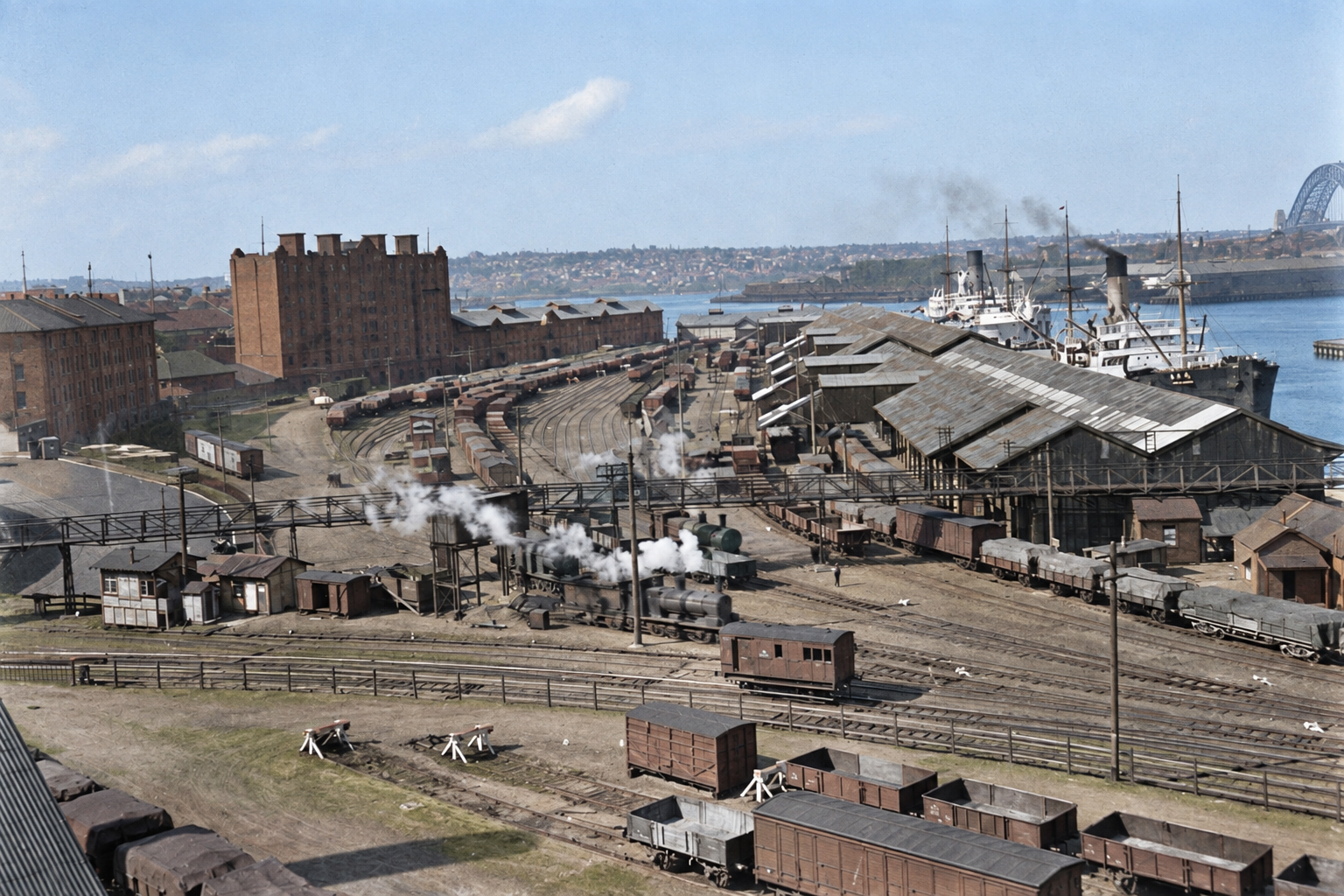
Overseas freight rates raised 25 per cent in Sydney

The Southern Cross
Elevated view over Darling Harbour goods yards, with railway tracks, sheds, locomotives and ships moored at the wharves.
Goods yards and wharves at Darling Harbour, Sydney. Colourised from original City of Sydney Archives photograph. Adam Forrest Grant / City of Sydney Archives, A-00025804

Overseas freight rates out of Australia go up 25 per cent from today. The Overseas Shipping Representatives' Association announced the increase this morning and said it takes effect immediately.

No period was set for the increase, and the association did not say which routes are affected.

It has also cancelled forward quotation bookings and existing freight contracts. Shippers who agreed a rate before the war will pay today's.

The day in pictures

Elevated view over Darling Harbour goods yards, with railway tracks, sheds, locomotives and ships moored at the wharves.
Goods yards and wharves at Darling Harbour, Sydney. City of Sydney Archives, 1932. Colourised from original City of Sydney Archives photograph.Adam Forrest Grant / City of Sydney Archives, A-00025804
Wide view of Canada's House of Commons chamber, with members seated at desks on both sides and spectators in the galleries.
Members of the House of Commons in session, Ottawa. 10 March 1938. Colourised from original Library and Archives Canada photograph.CGMPB / Library and Archives Canada / C-024358
Street view of the US Embassy chancery in Warsaw behind railings, with an American flag above the pavement and civilians nearby.
The United States Embassy chancery, Warsaw. 1 September 1939. Colourised from original Library of Congress photograph.Harris & Ewing / Library of Congress, LC-DIG-hec-27203

Where things stood at the start of the day

Poland
Berlin has changed its account of Warsaw: on Saturday it said its troops had reached the city centre, on Sunday that they withdrew to the outskirts. Warsaw radio says the defenders are giving ground slowly and the Germans have made no important gains.
The Atlantic
The Ministry of Information says the steamers Winkleigh and Goodwood have been sunk, both torpedoed on its account, with all crews rescued and no positions given. Sixty-seven British merchant ships remain held at Gibraltar, and responsibility for the Athenia is still disputed.
Britain at home
110 citizens' advice centres have opened across London to deal with separation allowances, rent and hire-purchase agreements, with a wider scheme promised on no stated timetable. Still not given: any British figure for aircraft lost at Wilhelmshaven, now a week ago.
Western Front
A French communiqué reports advances between the Saar and the Vosges, naming no ground. German wireless acknowledges French armoured cars on German territory and claims French casualties and prisoners, so both sides now say French troops are on German soil.
The Empire
Canada is at war with Germany. The Commons adopted the Address at 22:25 on Saturday night, Ottawa time, and the proclamation reached External Affairs early on Sunday afternoon: seven days after Britain, by Canada's own vote and its own document.
Neutrals
Washington applied its neutrality law and arms embargo to Canada within hours of the proclamation, so American arms cannot be sold to Canada any more than to Germany. TASS has named the five military districts calling up reservists, with no numbers and no destinations.
Background · Contraband control and merchant shipping in the first fortnight

Contraband control and the merchant fleet

Britain declared a contraband control system in the first week of the war. Merchant ships bound for Germany or for neutral ports that might transship to Germany are stopped, examined and, where cargo is held to be contraband, detained.

The main control stations are at Gibraltar, at the Downs off the Kent coast, and at Kirkwall in Orkney. Gibraltar held 97 vessels last week and released 30 on Saturday.

The system is slow by design. A ship may wait days for examination, and neutral owners have begun to complain about the cost of the delay.

The counterpart is the submarine campaign against merchant shipping, which has now sunk or attacked ships in the Atlantic on most days since 3 September. Freight rates and war-risk insurance have moved in response, most recently in Sydney.