Skip to the day
LiveWW2The Second World War, in real time
Day 12
Tuesday 12 September 1939

Britain confirms an army in France and will say nothing else about it, two governments give incompatible accounts of Warsaw, and Canada is the only government all day that has to be exact

From the LIVE WW2 feed

The day in dispatches

Filed through the day, as it happened
Newest first
Editorial

The war is announced. The particulars are not.

The London Sentinel

Three things were announced in London today and all three arrived with the particulars taken out.

There is a British army in France. The government will not say which units are in it, how many men it contains, which ports they came through, or where they stand tonight. The Prime Minister met the French Premier. The government will not say where, or about what. Between 7,000 and 8,000 civil servants are leaving the capital. The government will not say for where.

Every one of those silences is defensible on its own, and this newspaper would defend them. A published port is a bombed port. A named division is a targeted division. Any government that told an enemy where its army was assembling would deserve everything that followed. Censorship in wartime is a condition of fighting at all.
Summary

Where things stand tonight

Allied Press Service

Britain says its troops are in France and have not been in action. It has not said which units, how many, or where they are.

Polish General Headquarters says German forces have been pushed back from Warsaw and puts the nearest of them about six miles from the centre. Berlin says its encirclement of the capital is tightening. Both were issued today.

The French morning communiqué reported a calm night east of the Saar.

Lwów is digging trenches and building shelters. German reporting claims an advance towards the region, and that claim is the only basis for any statement about how near the fighting has come.

Both crews torpedoed on Monday are reported safe. The Scanpenn is picking up the Firby's men and the R. G. Stewart has the Inverliffey's.

Canada's first war budget puts a 20 per cent surtax on income tax, raises corporation tax, taxes excess profits and raises the cost of tobacco, tea and coffee. The munitions and supply bill is still before the Commons tonight.

Chamberlain met Daladier in France. The location is censored and nothing of the substance is public.

Latvia has called up three military classes. England and Wales will plough 1.5 million more acres.

Correspondent

Ilsley puts a 20 per cent surtax on income tax and a new tax on excess profits

The Atlantic Ledger
J. L. Ilsley's Budget Speech presents the government's financial proposals to the House of Commons, Government of Canada. Reproduced from Government of Canada Publications. Government of Canada Publications, F1-23/1E-PDF

Canada has put a price on its war and named the people who will pay it.

J. L. Ilsley, the acting Minister of Finance, laid the country's first war budget before Parliament today. Individual income tax carries a wartime surtax of 20 percent, which is 20 percent of the tax a man already owes rather than 20 points added to his rate. Corporation tax goes up. There is a new tax on excess profits. Cigarettes, tobacco, tea and coffee all cost more from now on.

The government estimates the special war levies will bring in about $21 million over the remainder of the present fiscal year. That is a forecast made by the people who wrote the measures, and it covers the war levies specifically rather than wartime revenue as a whole.

Wire

England and Wales are to plow another 1.5 million acres

The Atlantic Ledger

England and Wales will bring approximately 1.5 million additional acres under the plow for next year's harvest, Sir Reginald Dorman-Smith announced in London today.

The Minister of Agriculture put the number of tractors available at around 50,000. Scotland and Northern Ireland are running separate programs.

The purpose is not stated in the announcement and does not need to be. Every acre plowed at home is cargo that does not have to be carried across the Atlantic.

Three British merchant ships were attacked on that crossing on Monday.

Correspondent

Lwów radio says the city is digging trenches; Berlin claims an advance towards it

The Stockholm Observer
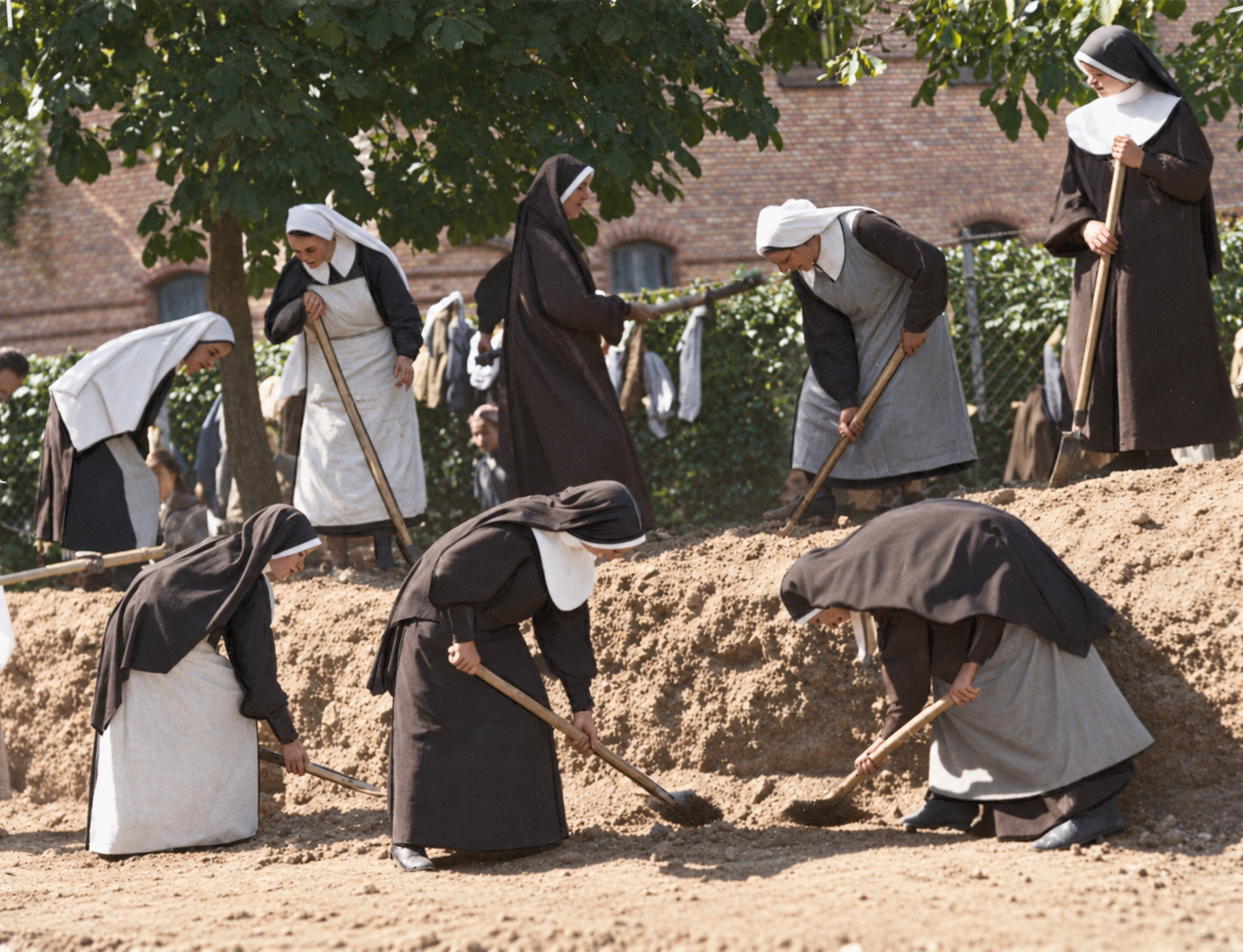
Nine Franciscan sisters in dark habits and white wimples digging a trench in loose earth with spades and hoes, in front of a brick building and a chestnut tree.
Franciscan sisters dig air-raid trenches on Wały Mościckiego, Lwów. Colourised from original National Digital Archives photograph. Oberhard L. / Narodowe Archiwum Cyfrowe, 3/1/0/7/3132/2

Two things are being said about Lwów today and only one of them can be stood behind.

The city's own radio says volunteers are digging trenches and building air-raid shelters, and that Lwów is being prepared for defence. That is a Polish broadcast about a Polish city, and it is the sort of claim a government has no reason to invent and every reason to make accurately, since the people doing the digging can see whether they are digging.

The second thing is German. Berlin claims a rapid advance through southeastern Poland, including movement towards the Lwów region. Every statement now circulating about how close the fighting has come to the city rests on that claim. There is no second account of it from anywhere, neutral or Polish.

Wire

Poland says the Germans are falling back from Warsaw. Berlin says the ring is closing.

Allied Press Service
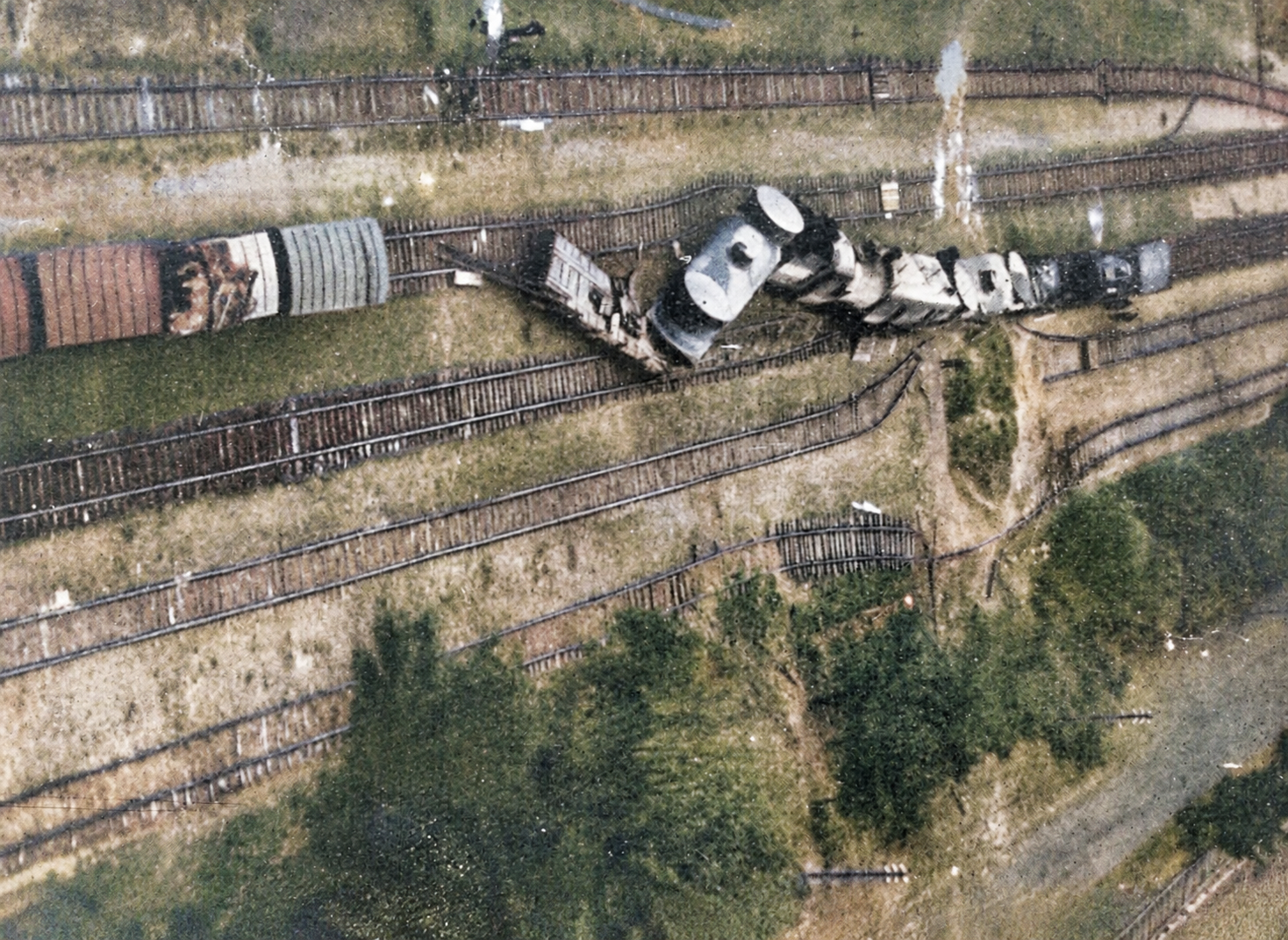
Aerial view of a railway junction with several sets of tracks, where a derailed armoured train lies buckled across the rails, its locomotive and wagons thrown at angles beside a siding.
A bombed Polish armoured train at Łochów. Colourised from original National Digital Archives photograph. Narodowe Archiwum Cyfrowe, 3/2/0/-/77/1

Polish General Headquarters says German forces attacking Warsaw have been driven back, and puts the nearest German troops about six miles from the centre of the city.

German reporting today describes the opposite: an encirclement of the capital that is tightening, with the position east of Warsaw closing.

Both statements were issued today. Only one of them can be accurate, and both arrive by the same route: a government describing its own army.

They agree on one thing. Heavy fighting continues around the capital, and it has run unbroken since the German columns first reached the outskirts.

Polish General Headquarters broadcast its claim from Lwów, in the southeast of the country, a long way from the city it describes.

Wire

Chamberlain and Daladier meet somewhere in France

The London Sentinel

Neville Chamberlain has met Édouard Daladier in France for talks on the conduct of the war.

The censor has released one detail, and it is the dateline: somewhere in France. Town, building and hour all stay back.

What the two men discussed, what they agreed and who else sat with them remain closed.

The censor has released the meeting and kept its contents.

Correspondent

Scanpenn picks up the Firby's crew; the R. G. Stewart has the Inverliffey's

The Atlantic Ledger

Both of the crews the Atlantic took yesterday are reported safe today.

The Scanpenn has signaled that she is picking up the men of the Firby, the British steamer torpedoed at 14:40 GMT on Monday. Separately, the Ministry of Information says the Inverliffey has been sunk and that her crew were taken off by the American vessel R. G. Stewart.

Neither ship was under any obligation to be there. The Scanpenn went because a position was broadcast, and the position was broadcast by the commander of the submarine that had just sunk the Firby, in a signal the Admiralty logged at 17:25 GMT on Monday. That remains one of the stranger transactions of the war so far, and nobody in London has offered an explanation of it.

BreakingWire

Britain says its troops are in France

The London Sentinel

British troops are in France. The government announced it in London today, and said they have not been in action.

That is the whole of the announcement. The units, the numbers, the ports, the crossing date and tonight's positions all stay with the War Office, along with any indication of when the men might go into the line.

The last time Britain sent a field army to France, in August 1914, the same silence was kept for the same reason.

The phrase the announcement uses is that the troops have not been in action.

Wire

Between 7,000 and 8,000 government staff are leaving London

The London Sentinel

Britain is moving somewhere between 7,000 and 8,000 government employees out of London, according to a report from the capital today.

The departments involved and the destinations they are going to are both being withheld, deliberately.

Those leaving are departmental staff. Ministers stay, and so does anyone whose work concerns wartime activities. The machinery of government is being spread out so that it survives whatever happens to the capital, which is a calculation the government has now made in the open.

The Cabinet stays in London, and so does the Prime Minister.

Wire

French communiqué reports a calm night east of the Saar

Allied Press Service

The French morning communiqué reports a calm night on the front east of the Saar.

It follows three days in which French reporting has described an advance onto German soil, most recently a claim of gains on a front of about twelve miles. Depth, units and losses have all stayed out of these communiqués since the operation began, and today's keeps to that.

This is a French operation, fought by French troops alone.

French forces have been on German soil since the night of 5 September.

Wire

Menzies appoints Captain Williams Controller of Shipping

The Southern Cross

Australia has appointed a Controller of Shipping. Captain G. D. Williams takes the post, Robert Menzies announced in Canberra today.

The announcement does not set out what powers the Controller will hold, or what he intends to do with them.

It follows the Prime Minister's statement to Parliament yesterday that the government is planning on the basis of a long war, and his consultations with the state premiers on finance and manpower.

Whatever Australia ends up contributing to this war, all of it has to travel by sea.

Eyewitness

A traveller out of Poland reaches Riga

The Stockholm Observer
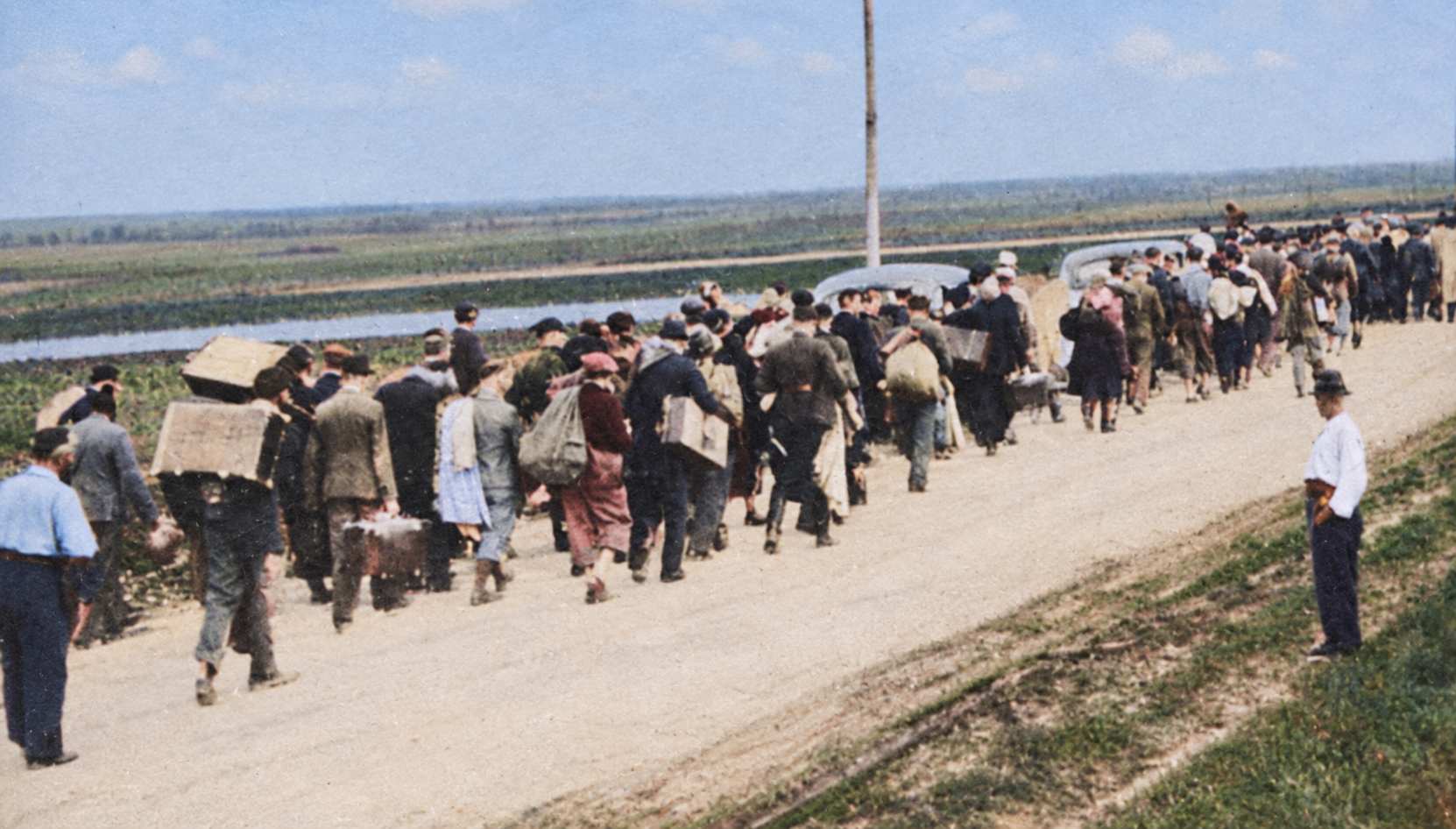
A long column of civilians walking away from the camera along a dirt road across open farmland, carrying suitcases, bundles and sacks, with a covered cart among them and a man standing at the roadside watching them pass.
Polish civilians leave their towns on foot, September 1939. Colourised from a photograph reproduced in Jerzy Piórkowski's Miasto Nieujarzmione, Warsaw, 1957. Unknown photographer / reproduced in Jerzy Piórkowski, Miasto Nieujarzmione, Warsaw: Iskry, 1957, p. 15. Public domain (PD-Polish).

A Latvian journalist reached Riga last night. He had come out of Poland by road, and Reuters is carrying his account this morning.

He drove through burning towns and villages. Smoke stood over them. The roads were full of people walking away from something, in numbers he gave up counting.

He saw the fires. Which towns they were, and who lit them, is past what a man on that road could establish. He was moving, and he kept moving.

This is how Poland reaches the rest of Europe now. The frontier is a day away, the wire office is here, and the news arrives one traveller at a time, in the state he brought it.

Wire

Latvia orders three military classes to report

The Stockholm Observer

Latvia has ordered the partial mobilisation of three military classes, Reuters reports from Riga.

The order names the classes and very little else. Numbers, postings and duration are all left out of it, and Riga has issued the order bare, with its reasoning kept back.

Latvia is neutral, and has stayed publicly silent on both the campaign in Poland and the reserve call-up announced in Moscow on Monday.

The order reached the outside world the way most news from this coast now does, through Riga, on the Reuters wire.

The day in pictures

A long column of civilians walking away from the camera along a dirt road across open farmland, carrying suitcases, bundles and sacks, with a covered cart among them and a man standing at the roadside watching them pass.
Polish civilians leave their towns on foot. September 1939. Colourised from a photograph reproduced in Jerzy Piórkowski's Miasto Nieujarzmione, Warsaw, 1957.Unknown photographer / reproduced in Jerzy Piórkowski, Miasto Nieujarzmione, Warsaw: Iskry, 1957, p. 15. Public domain (PD-Polish).
Aerial view of a railway junction with several sets of tracks, where a derailed armoured train lies buckled across the rails, its locomotive and wagons thrown at angles beside a siding.
A bombed Polish armoured train at Łochów. 10 September 1939. Colourised from original National Digital Archives photograph.Narodowe Archiwum Cyfrowe, 3/2/0/-/77/1
Nine Franciscan sisters in dark habits and white wimples digging a trench in loose earth with spades and hoes, in front of a brick building and a chestnut tree.
Franciscan sisters dig air-raid trenches on Wały Mościckiego, Lwów. August 1939. Colourised from original National Digital Archives photograph.Oberhard L. / Narodowe Archiwum Cyfrowe, 3/1/0/7/3132/2
J. L. Ilsley's Budget Speech presents the government's financial proposals to the House of Commons. 12 September 1939. Government of Canada. Reproduced from Government of Canada Publications.Government of Canada Publications, F1-23/1E-PDF

Where things stood at the start of the day

Warsaw
Three transmitters described the fighting around the capital on the 11th and none of the accounts agreed. Warsaw radio was still transmitting at the close of the day.
Western Front
The French evening communiqué claimed gains on a front of about twelve miles east of the Saar. No depth was given and no units were named.
The Atlantic
Three British merchant ships were attacked on the 11th. Firby was sunk at 14:40 GMT, and the commander of the submarine that sank her signalled her crew's position to the Admiralty at 17:25 GMT.
Canada
Parliament was asked for up to $100 million, and told militia activity could involve at least 40,000 men. No decision was announced on sending a force abroad.
Turkey
Refik Saydam told the Grand National Assembly that Turkey is outside the present war. Negotiations with Britain and France continue.
Australia
Robert Menzies told Parliament the government is planning on the basis of a long war, and has consulted the state premiers on finance and manpower.
Background

The force Britain has just admitted to sending